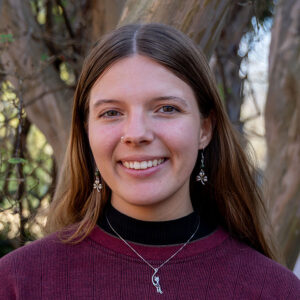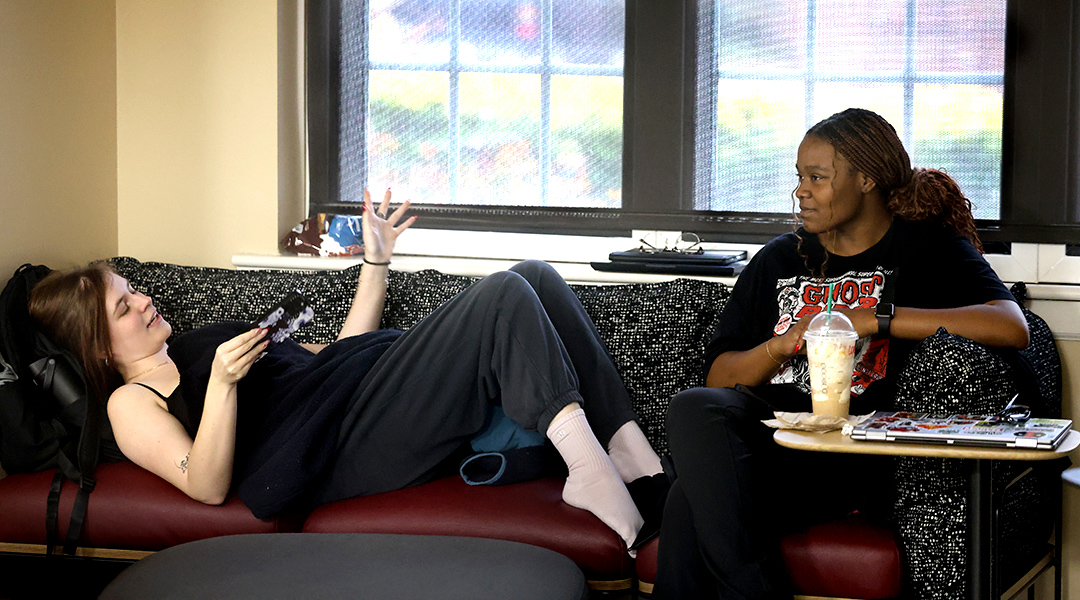
First-generation college student, biomedical engineering sophomore Madison Merritt, left, talks to sophomore cyber policy and ethics student Shakial Dennis in the hub of the First-Generation Center at the University of South Carolina’s Maxcy College on Feb. 18. Photo by Lacy Latham/The Carolina Reporter
First-Generation February highlights first-generation students at the University of South Carolina, offering events and resources to build community and improve access to academic and professional support.
USC identifies first-generation students as individuals whose parents have not earned bachelor’s degrees, making up about 20% of the university’s current population.
To support them, the university opened the First-Generation Center in fall 2024. The center coordinates programming year-round, but first-generation groups branded the month as First-Generation February to dedicate a time in the spring for the population.
Events include a financial literacy workshop game night, community service collaborations, an education abroad workshop, a button-crafting event, a graduate student networking evening and more.
First-Generation Center Assistant Director Melissa Kupfer joined when it launched.
“I really have a passion for this work because I’m first-gen,” Kupfer said. “When I saw the university was putting a lot of energy and resources into creating a center, I said, ‘This is the kind of passion work that I really want to do, a place where I can feel like I’m making a difference.’”
First-generation students historically have lower graduation rates, said Kupfer, which influences the center’s focus on retention and engagement. The goal of First-Generation February is to strengthen community while connecting students to career-building and professional development resources.
“Honestly, just knowing that they’re an option has been reassuring,” Izzy Bennett, a senior statistics first-generation student, said.
Navigating college without a family history in higher education can feel isolating, Bennett said.
“I’m really interested in research, and my family doesn’t have anything to give,” Bennett said. “A lot of my friends, they come from academic backgrounds, and it was weird … they had knowledge that I didn’t have.”
Events highlighting first-generation students and professionals help demystify the process.
“That means so much to know that there are professors around who have been through what I’ve been through,” Bennett said.
The center is on the bottom floor of Maxcy College, a Living and Learning Community where first-generation students live near advising, classroom and lounge spaces. Natalia Kraft, a junior business management and marketing major, works at the front desk.
“It’s provided me a lot of resources,” Kraft said. “I came in … not knowing much, and even being involved with, like, first-generation activities, I feel like I was just learning. I’ve just really expanded that and been able to spread that to other people.”
Kraft, from her desk, watches groups of students chatting in the lounge throughout the day, greeting fellow first-generation residents who walk in.
“I really like the environment here,” Kraft said. “Supervisors are great. They’re really good mentors and just leaders overall. You can tell how supportive they are of the community here and that they’re looking after everyone.”
From a weekly newsletter to partnerships across campus, the First-Generation Center works with offices including the Career Center, Student Success Center, Counseling and Psychology Service, Office of Enrollment Management and more to expand services for first-generation students.
Freshman sport and entertainment management first-generation student Michael Davis said the support carries personal significance.
“It means a lot to me because my family did not come to college,” Davis said. “I want to be in that top 3% when I do graduate college to show other foster kids that … they’re capable of doing what they want to achieve.”
Beyond February events, the center offers mentoring programs that pair students with other first-generation mentors, as well as specialized advising and class sections.
The center also provides scholarships and financial assistance through funding from the university and small grants and initiatives such as Give 4 Garnet.
“If we could have more grants and more donations, that would help us to expand our safety nets for students,” Kupfer said.
Kupfer said the center’s mission extends beyond a single month.
“The center’s importance is twofold,” Kupfer said. “Building community and making others aware of the fact that this is a point of pride … that you’re doing something that others before you have not been able to do, you know, but also to ensure that we’re supporting our students who are so talented and so brilliant to help them to become who they came here to be.”
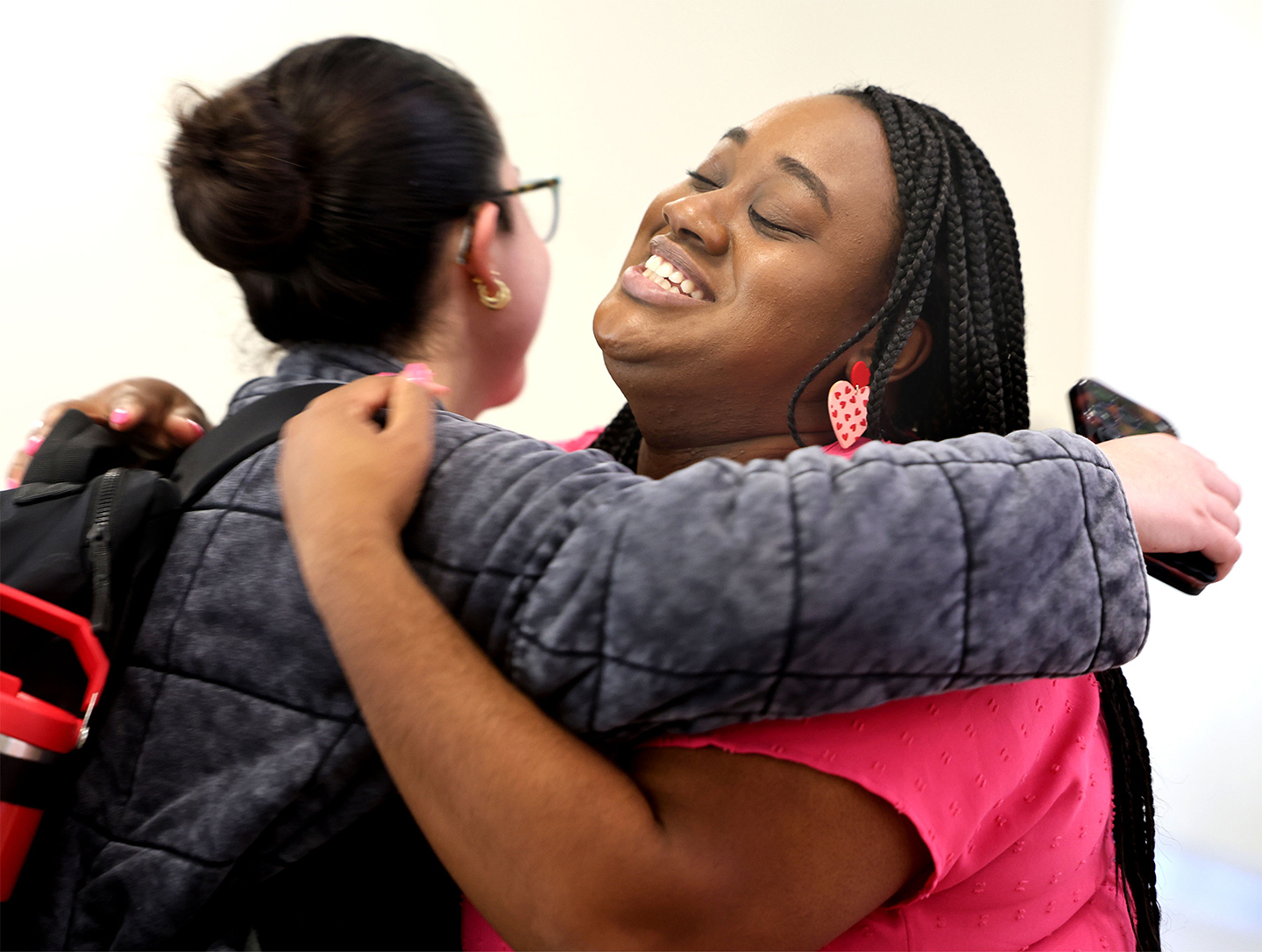
Jasmine Carter, program manager for organizational development and innovation for the College of Hospitality, Retail and Sport Management, hugs business freshman Ava DePalma at the HRSM Loves Our First-Gen Students event Feb. 12 in the Close-Hipp Building. Photo by Lacy Latham/The Carolina Reporter
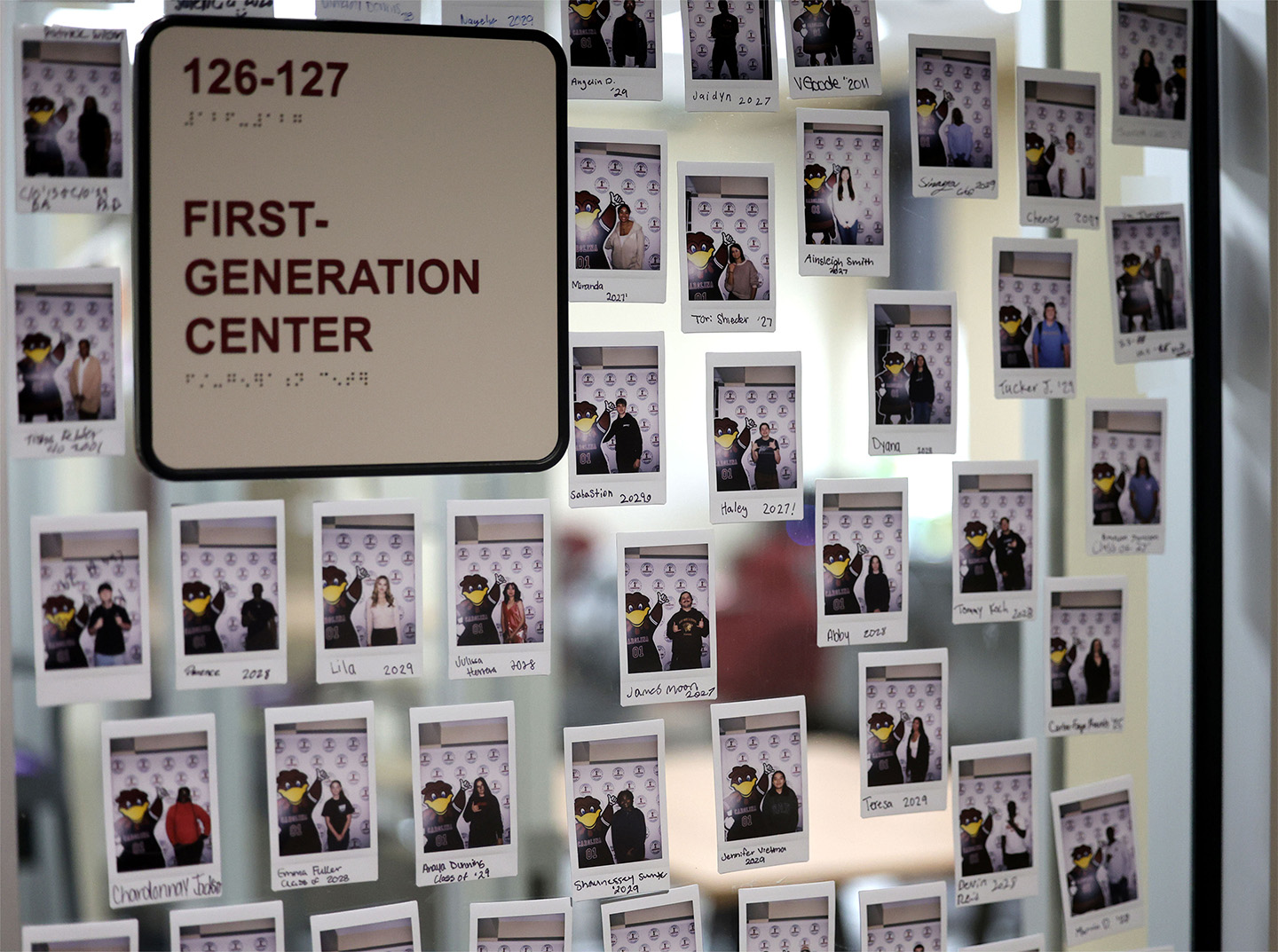
Photos display first-generation students who have visited the First-Generation Center at Maxcy College. Photo by Lacy Latham/The Carolina Reporter
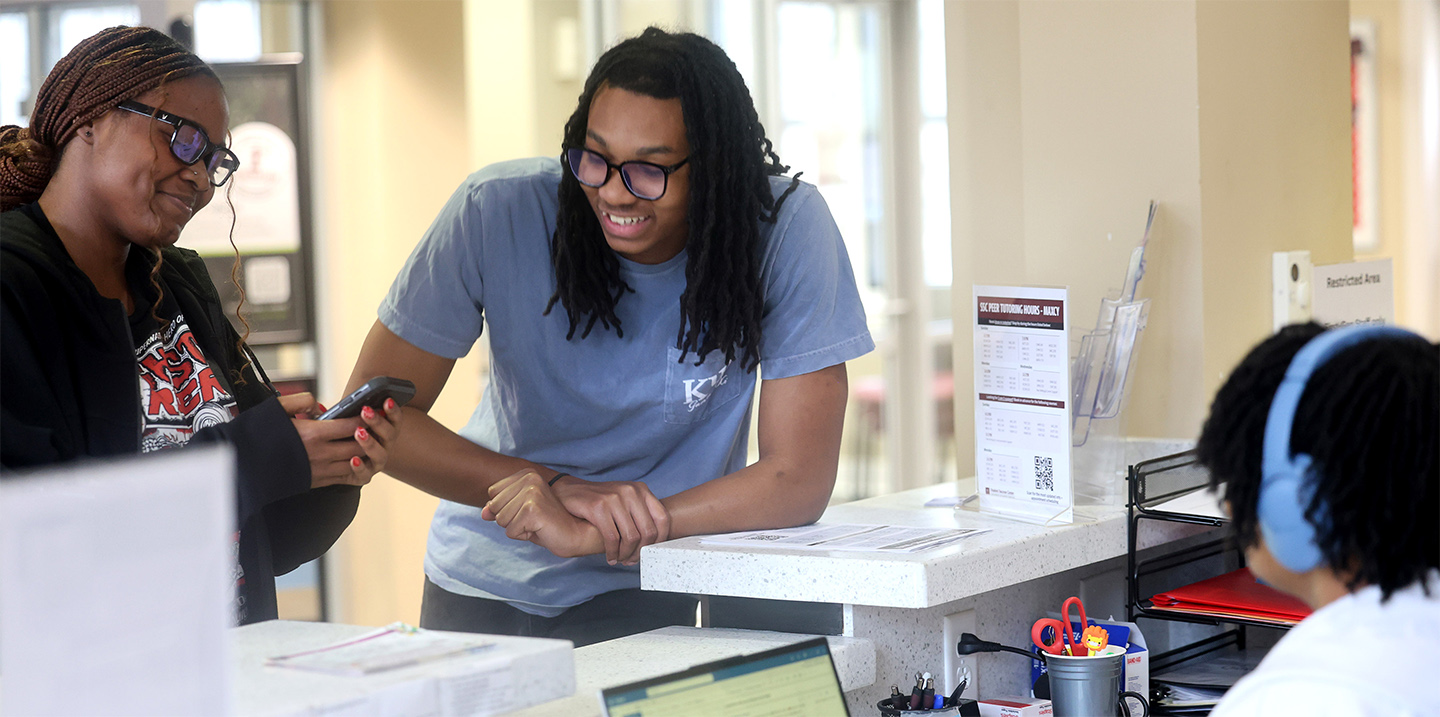
Sophomore first-generation cyber policy and ethics student Shakial Dennis, left, chats with junior pharmacy student, Brandon Jamison, and sophomore information sciences student Paris Hill, right, at the front desk of Maxcy College on Feb 18. PPhoto by Lacy Latham/The Carolina Reporter
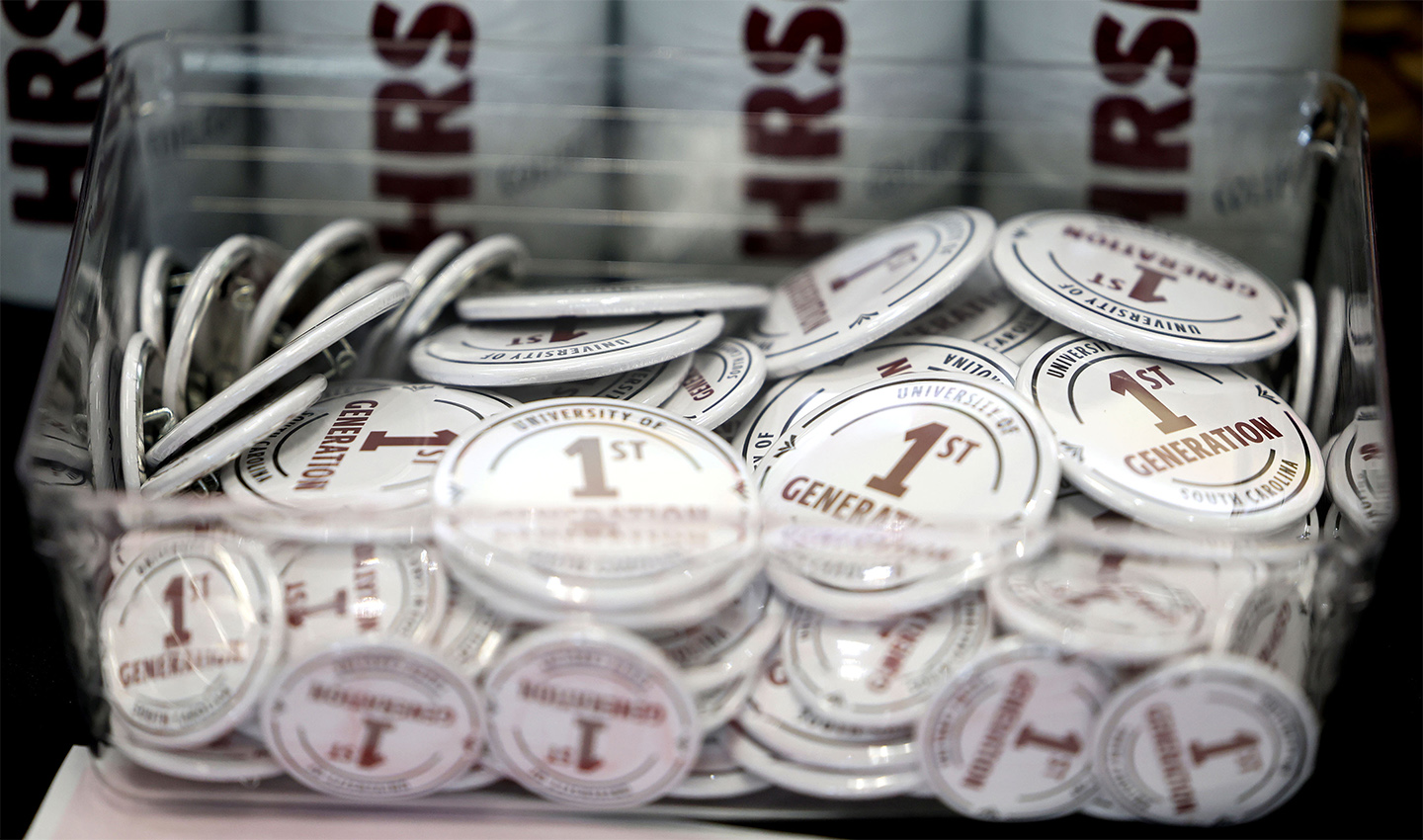
Pins sit out for first-generation students to wear at the HRSM Loves Our First-Gen Students event on Feb. 12 in the Close-Hipp Building. Photo by Lacy Latham/The Carolina Reporter
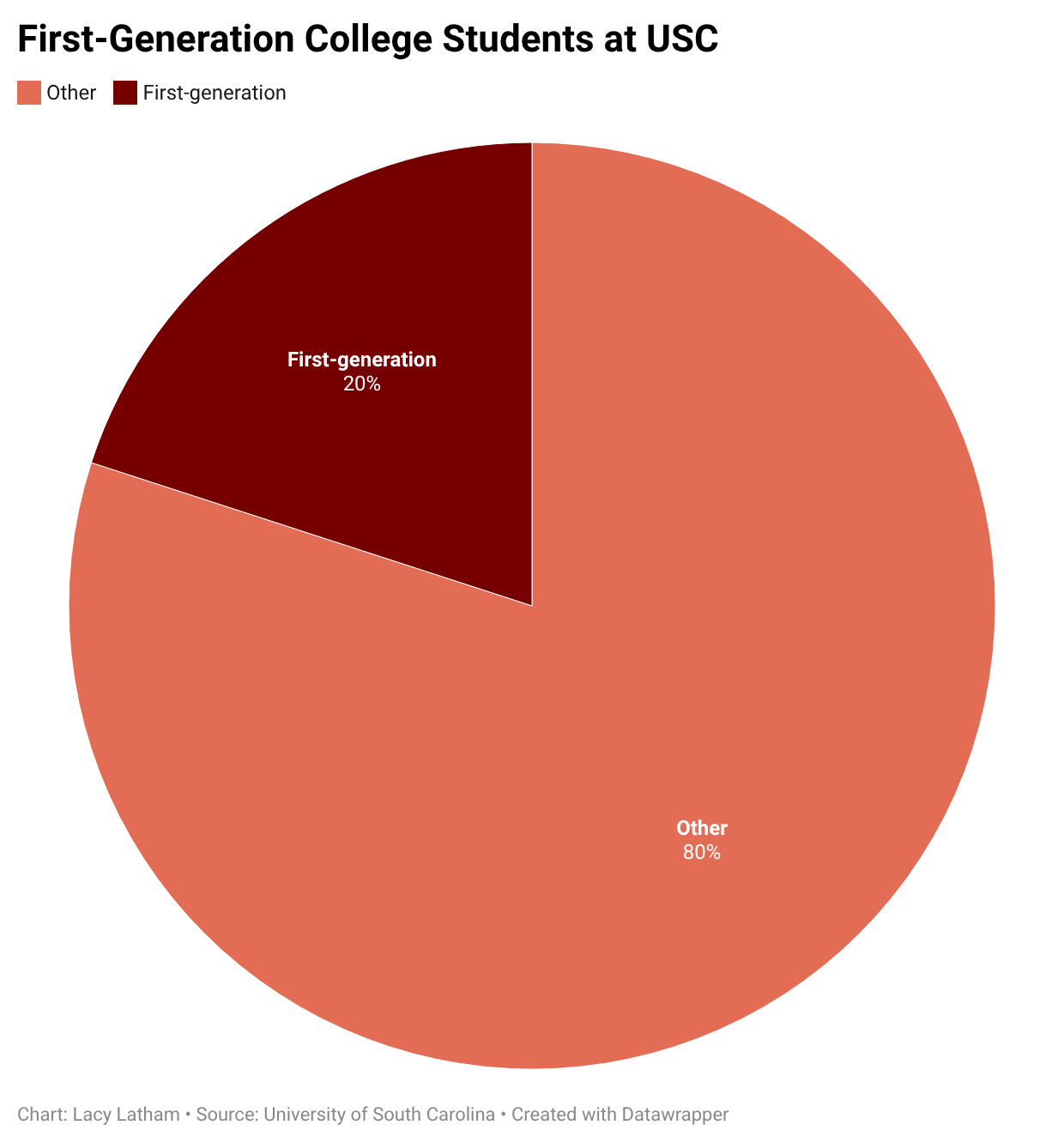
A pie chart demonstrates that 20% of USC’s current population consists of first-generation students. Graphic by Lacy Latham/The Carolina Reporter
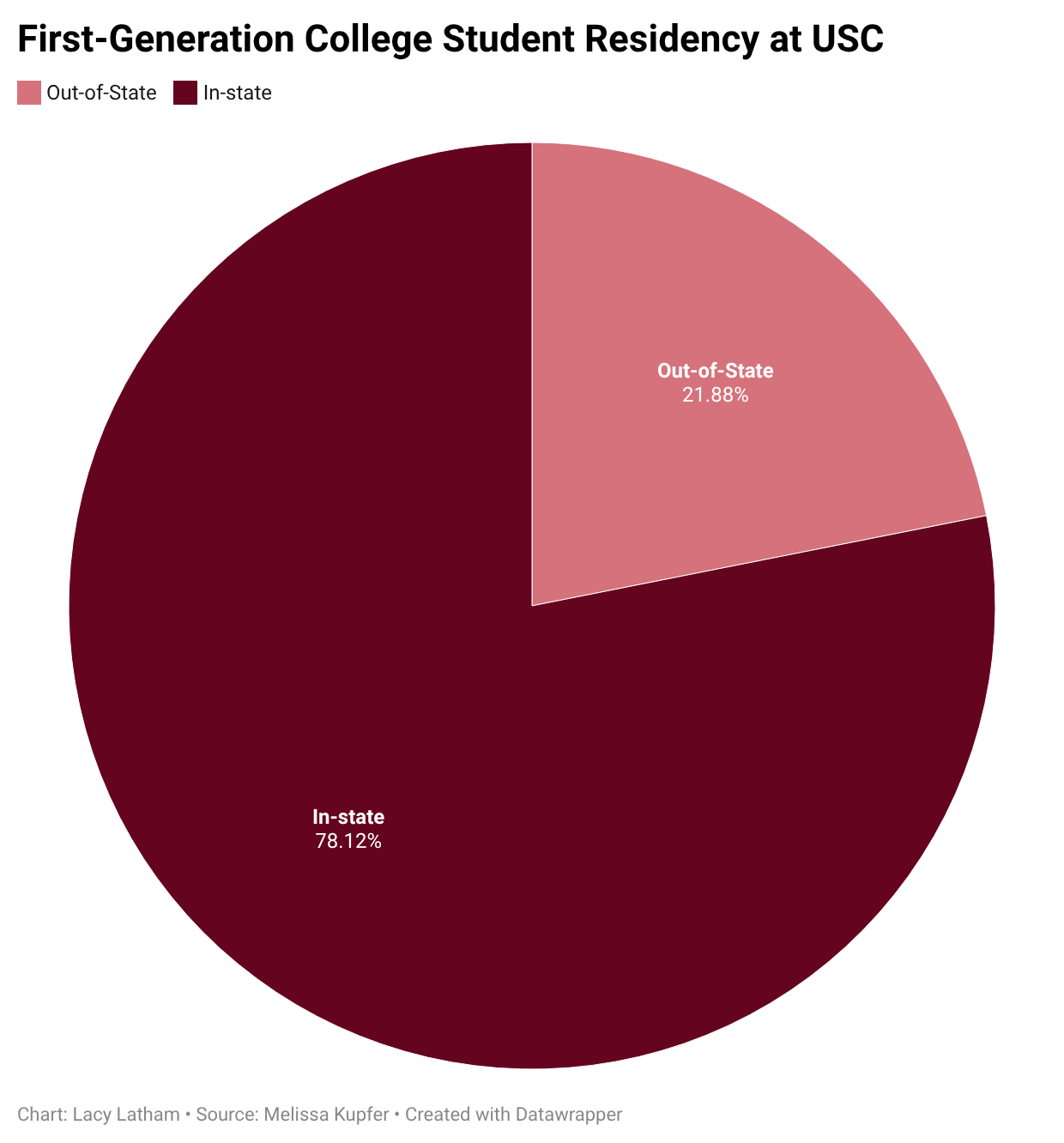
A pie chart shows that 78.12% of USC’s current first-generation students hold in-state residency statuses. The other 21.88% are out of state. Graphic by Lacy Latham/The Carolina Reporter