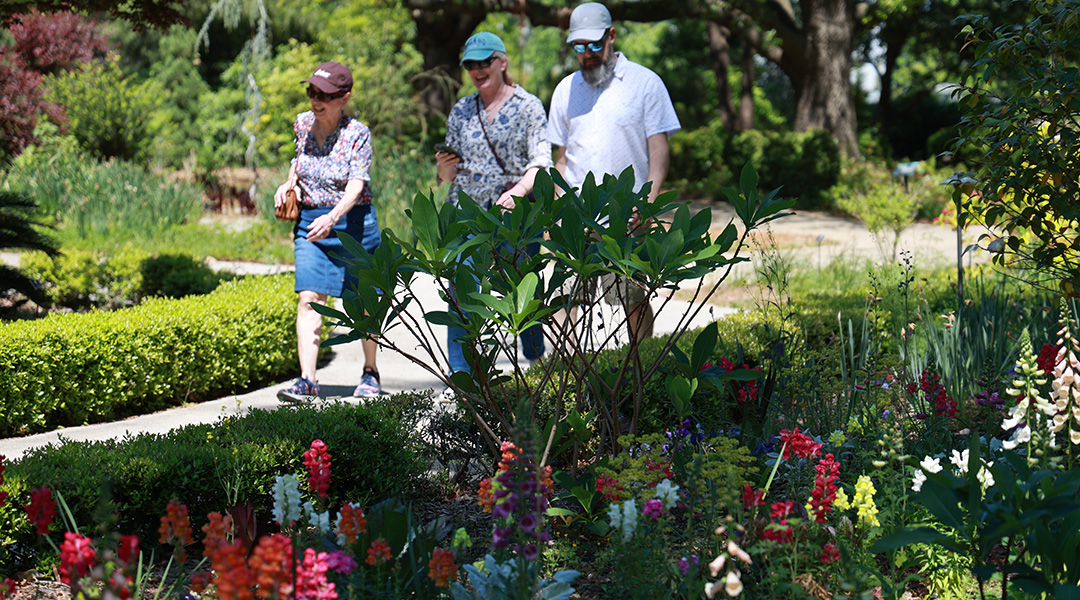
The Hampton-Preston Mansion Gardens, renovated in 2018, offer a walking path between the flowers and trees. Photo by Penelope Marshall/The Carolina Reporter
Four of Columbia’s historical landscapes are quietly thriving, and more people are starting to notice.
Historic Columbia has gardens at the Robert Mills House, Hampton-Preston Mansion, Seibels House and the Woodrow Wilson Family Home, all of which are free to the public.
“Historic Columbia’s gardens are more than beautiful plants — they’re our living collection,” horticulturist Rebecca Townsend said. “Every plant tells a story of those who cultivated the land, relied on its harvest and found solace in its beauty.”
Chris Mathis, Historic Columbia’s horticulture manager, has been with the organization for nearly four years. He oversees the general upkeep of the gardens, manages the horticulture team and handles everything from weeding and pruning to propagating plants for the twice-yearly plant sale.
One of his favorite parts of the job often gets overlooked. He enjoys preserving plants that many visitors might walk past without realizing their significance.
“People visit these gardens all the time, and these things just sort of blend into a pretty landscape, which is great,” Mathis said. “But I think what people don’t realize sometimes is how rare or endangered some of these plants are … (They) have some sort of story, some sort of history and tie to South Carolina or a specific person, or there’s just hardly any left in existence.”
That preservation extends to Historic Columbia’s Spring Plant Sale, which was held April 10-11 at the Hampton-Preston Mansion gardens. On sale were heirloom flowers, shrubs, vegetables and perennials, with many rare varieties grown from Historic Columbia’s own gardens.
The plant sales have become a hub for community engagement, and Mathis has watched that strengthen over his time working in the gardens. He described a pattern: someone starts taking a quiet loop through the gardens on their lunch break, then becomes a regular face, then starts asking questions.
“You can just see them light up the more they learn about plants,” he said. “They want to know what they’ve been walking past for two years. That’s always fun to engage with.”
Since retiring, Columbia resident Valerie Davis has begun to visit the spaces at least twice a week.
“Just walking through these gardens inspires me to want to get outside, get in the sun, and just experience the colors of nature,” she said.
Mathis said one of the biggest challenges is letting people know the gardens exist and are open.
“At least once a week, someone has peeked over the fence and said, ‘What is this?’ or ‘Do you mind if I come in?'” Mathis said. “And we’re like, ‘Please come in here.’ People just don’t know that it’s here at all, or that it’s open to the public.”
For Mathis, he wouldn’t want to work this job anywhere but Columbia. He said he’s committed to building something meaningful here at home.
“I really like … being a part of the community and trying to grow something here, rather than just going and participating in something someone else has already established,” he said. “I like being a brick in the wall of something a little closer.”
Historic Columbia’s gardens are free and open to the public at all four locations.
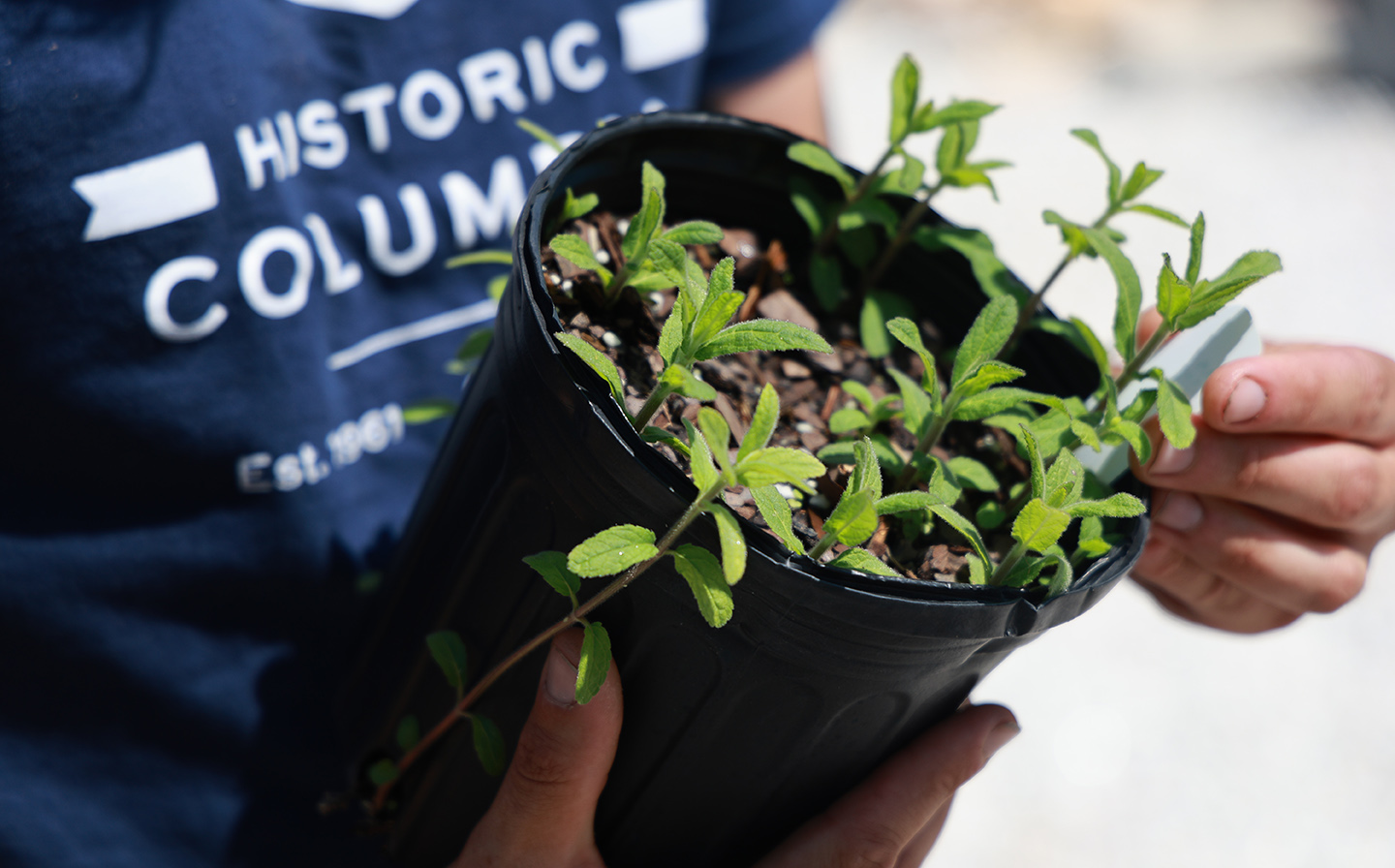
Historic Columbia holds a plant sale twice a year, allowing visitors to purchase and learn about the plants grown around the historic houses it manages. Photo by Penelope Marshall/The Carolina Reporter
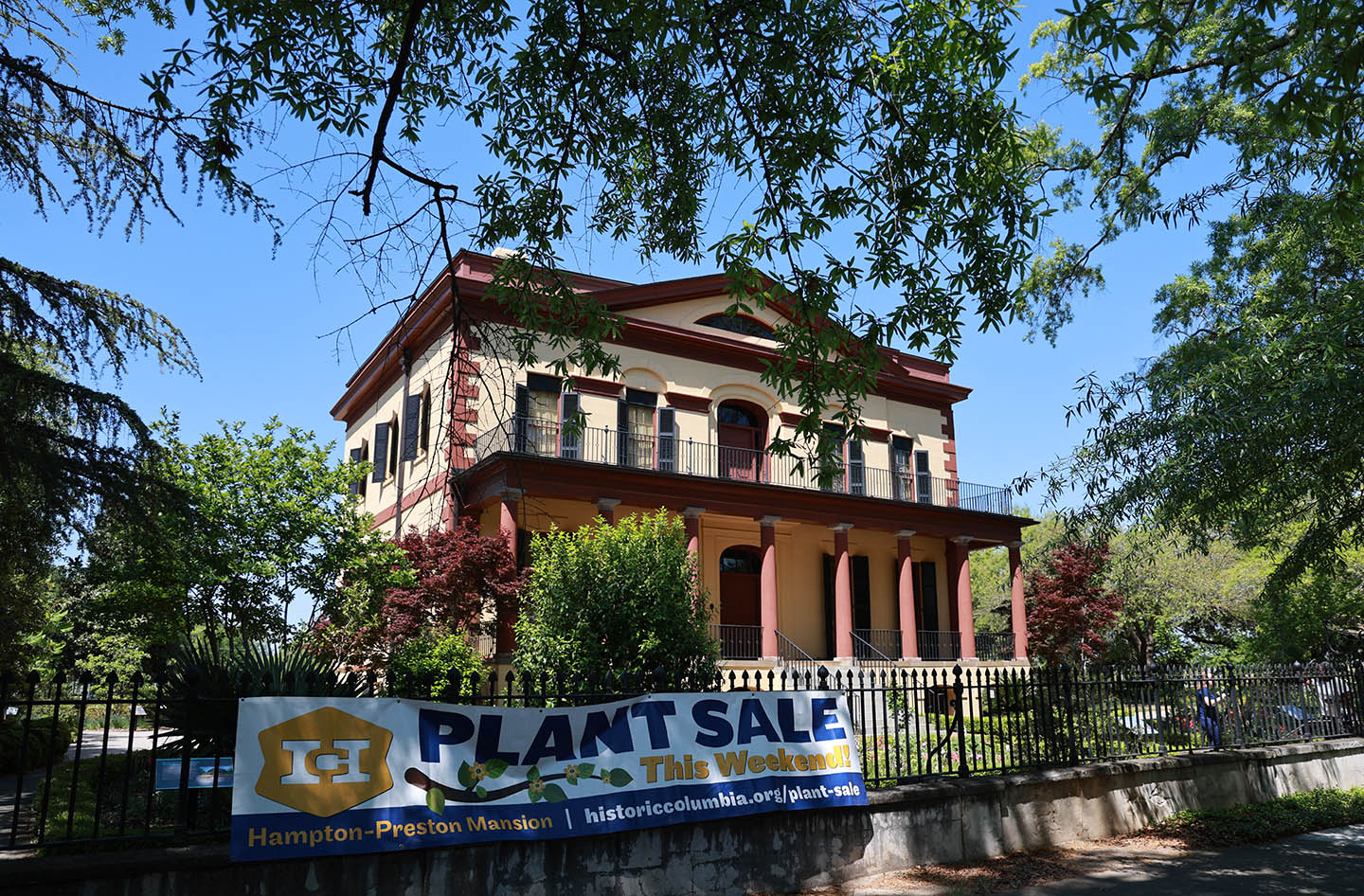
The Hampton-Preston Mansion was home to successive, wealthy families in its 200-year history. Photo by Penelope Marshall/The Carolina Reporter
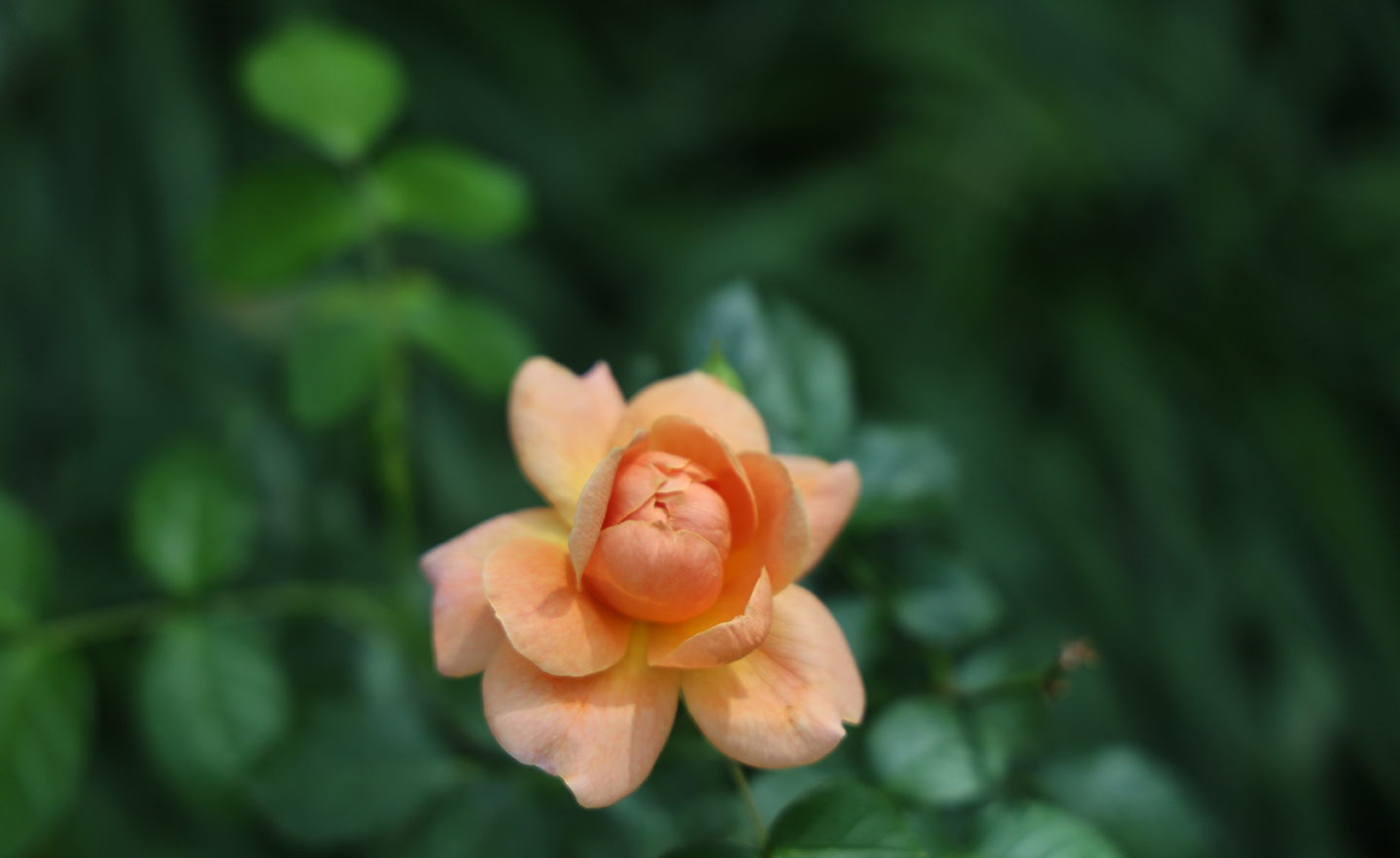
An At Last Rose blooms in the Seibels House gardens. Photo by Penelope Marshall/The Carolina Reporter
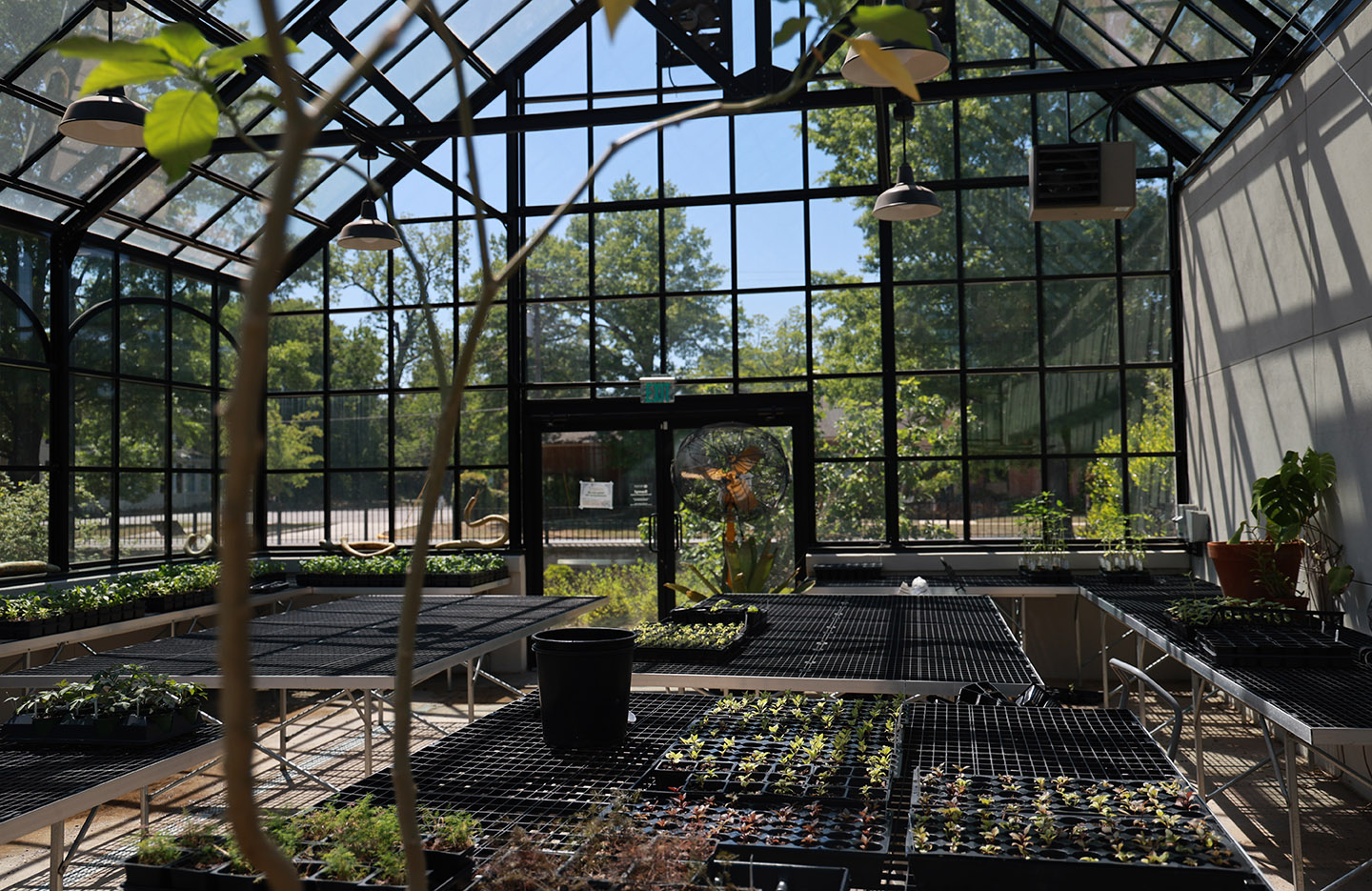
Among multiple recent changes and renovations for the gardens, the Boyd Foundation Horticultural Center was completed in 2022. Photo by Penelope Marshall/The Carolina Reporter