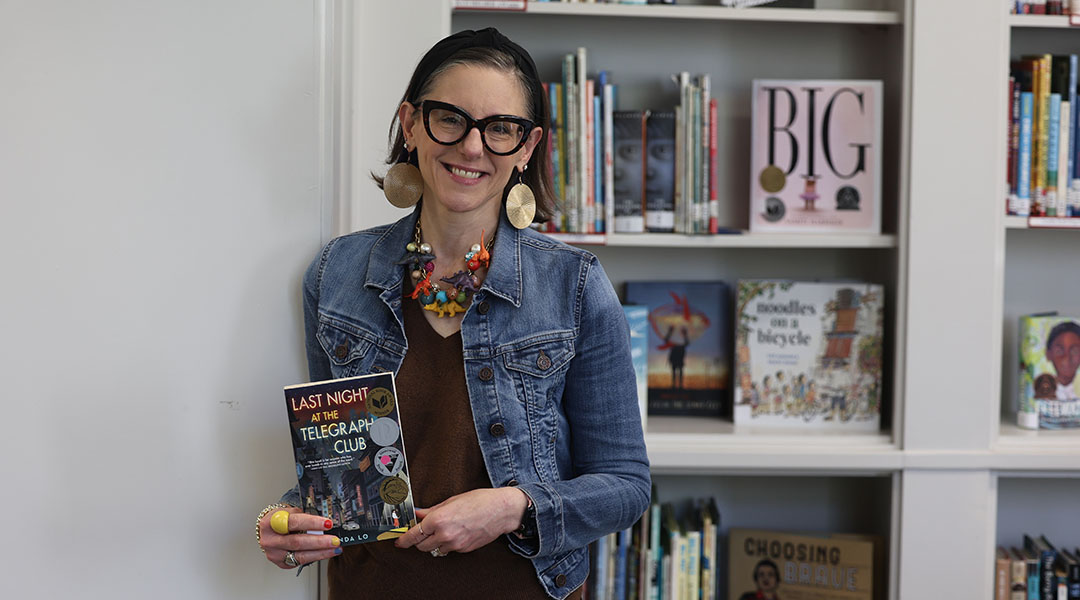
Valerie Byrd Fort, a USC professor and former librarian, poses with one of the books that has been banned from South Carolina public school classrooms and libraries. Photo by Giovanni Cusatis/Carolina Reporter
South Carolina public school students and librarians recently sued state Superintendent of Education Ellen Weaver over a book-banning policy.
The department in June 2024 consolidated the decision over which books could be banned, taking away that power from local school boards. Since then, 22 books have been banned statewide, the largest number of state-mandated book bans in any state, according to PEN America.
The American Civil Liberties Union of South Carolina filed the suit Oct. 7 on behalf of a group of public school librarians and students.
Jamie Gregory, a member and past president of the S.C. Association of School Librarians (SCASL), said the book regulation conflicts with the state obscenity law.
“They do not require themselves to read the entire book that has been challenged,” she said. “They do not consider literary and scientific merit, and those protections are in state obscenity law.”
Gregory said the new regulation is vague and inconsistent. She said George Orwell’s “1984” has a scene that violates the regulation, however, the board decided not to ban it.
“If you are going to decide randomly to keep some books even though they do violate the regulation, that’s an issue,” she said.
Valerie Byrd Fort is a USC faculty member in the School of Information Science, a past president of SCASL and worked as an elementary school librarian for 15 years. She said the loose regulation has led to an increase in self-censoring behavior for librarians. She said it is specifically seen in LGBTQ+ books.
“Librarians are less likely to order something (for their schools) that might just have characters who are gay,” she said. “They are not selecting things that may have been selected before the regulation just because they aren’t sure.”
Katherine Freligh, SCASL’s legislative chair, said the regulation also has affected students and teachers.
“We have seen an increase in teachers who have stopped putting out their classroom (book) libraries” for students, she said. “It has established a culture of fear.”
Cassie Owens Moore, a Lexington middle school teacher and librarian, said the regulation limits students’ education.
“As a school librarian, we try to open up kids to new ideas and perspectives because we want our students to be a part of the global community,” she said. “This lawsuit is saying that one body of people does not have the right to decide what students are ready for.”
She also said books can be a space for students to read about similar experiences they have faced.
“Certain books aren’t for everyone, but that doesn’t mean a book isn’t for anyone,” she said. “Books are our love language. We can’t tell a student what to do. But we can give them a book with a character that has a similar situation, and they can tell me what they thought about it.”
Fort said her hopes for the lawsuit are for either the regulations to go away or for the process of book-banning to return to the district level.
“Once the school district makes a decision, it should stay there,” she said. “Every community is different.”
Jason Raven, public information director for the state Department of Education, said the department will mount a strong defense.
“The SCDE will vigorously defend these commonsense policies, which set clear and legally sound standards for South Carolina’s public schools,” he said.
Public school teachers and librarians are still trying their best to navigate the lines of the regulation to teach students while the lawsuit is pending.
Moore said after one of her classes finished reading a middle-school-level book that talked about sexual abuse, a student stood up and said the book gave him the chance to understand what someone else could be going through.
“We’re teaching kids how to have empathy and how to look beyond themselves,” Moore said. “That’s not something you can put in a lesson plan, and that is why kids need access to these books.”
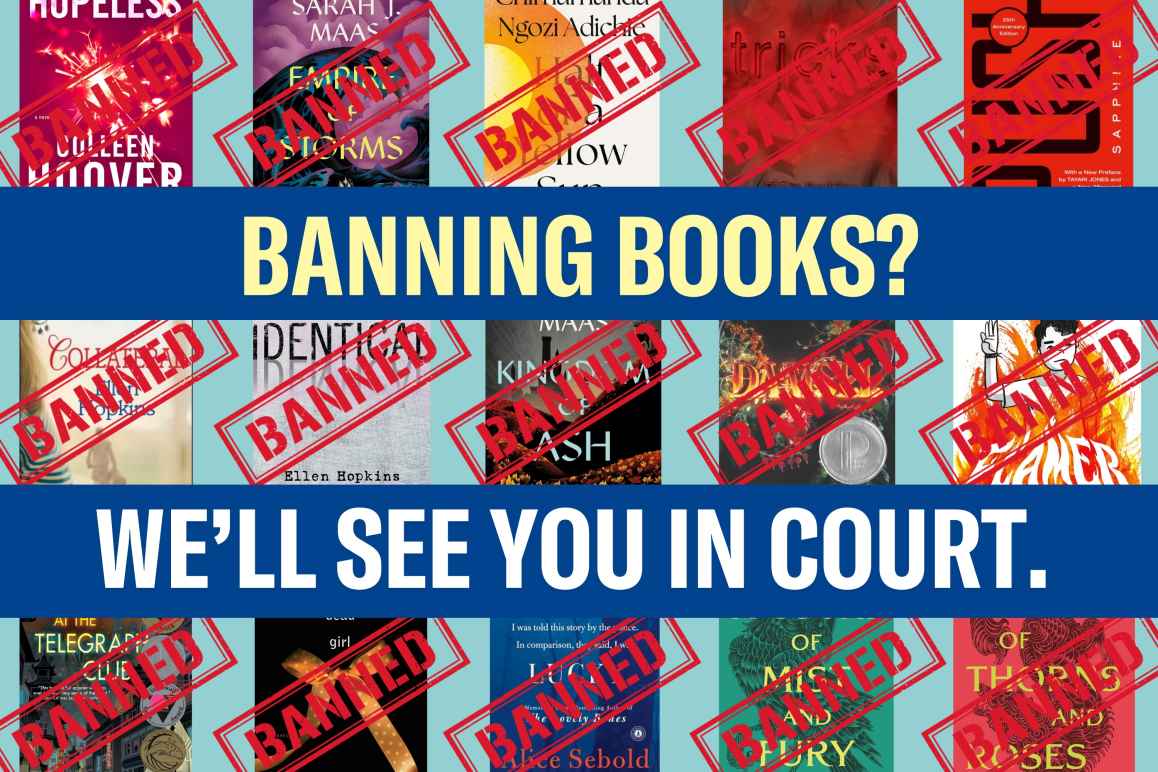
The American Civil Liberties Union of South Carolina filed a lawsuit on Oct. 7 on behalf of the S.C. Association of School Libraries and three public school students. Photo by American Civil Liberties Union/Carolina Reporter