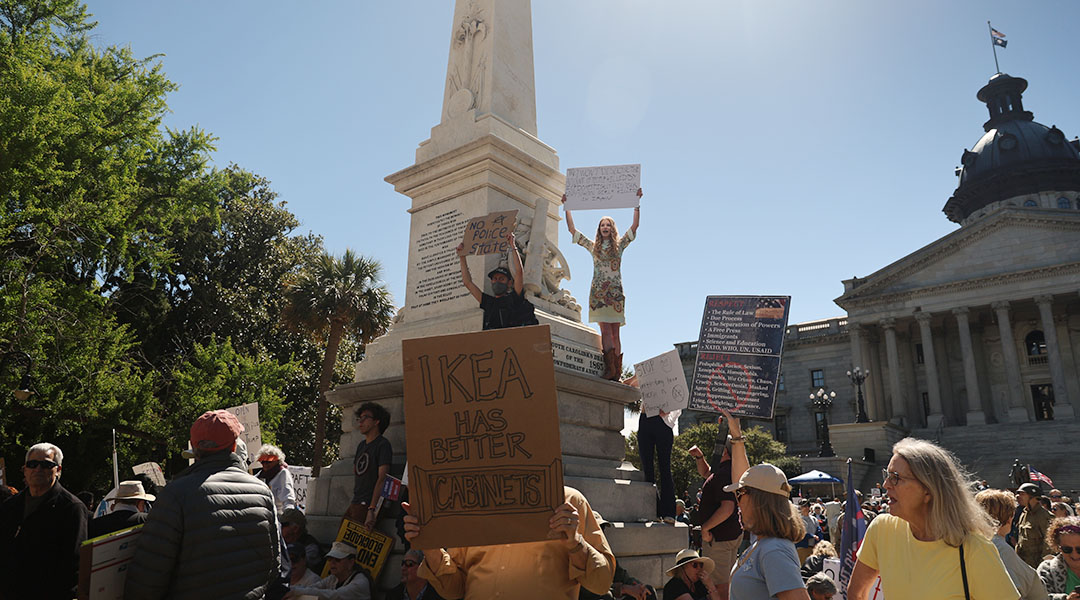
Protesters with signs stand on the South Carolina Monument to the Confederate Dead, facing Gervais Street. Photo by Julia Moulton/The Carolina Reporter
Protesters gathered Saturday at the Statehouse for Columbia’s third “No Kings Day” demonstration.
The national effort, part of a nationwide movement opposing what organizers describe as an abuse of executive power by the Trump administration, included more than 3,000 protests across the United States. In South Carolina, a reliably conservative leaning state, a passionate crowd still assembled in the capital.
“I just think all age groups and all occupations, whatever you are in life, should be represented here,” said Karen, a retired South Carolina school librarian who declined to give her last name for fear of retribution. “Because this man has crossed the line.”
It’s all about control, she said.
“He’s going to put his name on the money, for God’s sake. It’s not his money.”
Just after 10:30 a.m., chants grew louder as college student Quinnie Mustian and fellow protester Charlie Michaud led the crowd through megaphones.
“Biggest threat in the world today: Donald Trump in the USA,” they chanted alternately.
Their group of four brought a rolling bin filled with premade signs for other protesters to borrow.
“We’re here mostly to oppose the war in Iran, to oppose American imperialism and to focus on the fact that money in this country should be spent meeting people’s needs rather than increasing profits for billionaires and those benefiting from this war,” Michaud said.
“No Kings Day” national organizers selected the March 28 date in part to highlight opposition to U.S. involvement in Iran. When asked why they attended, many Columbia protesters cited the war.
“The destruction of national student health and the CDC, taking away money from the Department of Education and going into a war without asking the American public or Congress,” said Mackenzie Pack, a South Carolina native, listing her reasons. She attended with her husband and son.
“It’s not just Trump taking on powers that don’t belong to the executive branch or ordering the military to conduct actions that may violate the Geneva Conventions,” said Mike Martin, an Air Force veteran. “It’s also Congress not doing its part, not fulfilling its Article I responsibilities.”
Martin said he believes American’s loyalty is to the Constitution and not to a single person.
“I don’t think it’s a liberal or conservative issue,” he said. “It’s a Constitution versus kings issue.”
Martin views the situation in Iran as a symptom of too much power being concentrated in one branch, an issue he said concerns him enough to attend his first protest.
“I am not a demonstrator at heart,” Martin said with a laugh.
Many protesters also emphasized reclaiming national symbols, particularly the American flag.
“For a while MAGA was using the American flag as a symbol of their movement, and it’s important that we realize the American flag belongs to all Americans,” said Augie Grant.
Grant, a recently retired University of South Carolina journalism professor, carried a large American over his shoulder.
“Whenever anyone sees the American flag that should mean I stand for the constitution,” he said.
Grant stood with his wife, Diane, both longtime Columbia residents, but not South Carolina natives.
“I got my doctrine in California,” Grant said. “In California, I was the most conservative person in the room. In South Carolina, I’m the most liberal. And I am the same,” Grant said.
Nineteen-year-old Ray Dennis held a sign reading, “Your neighbor is not your enemy.”
Dennis, who said she grew up in a religious household but that her views have shifted over time. She said she believes some Republicans emphasize Christian values but miss their core message.
“The politics down here I feel like what’s missing is what Jesus actually said: to love your neighbor and care about them,” she said, “I’m really not happy with how the government has been treating us.”
A group hoping to start a USC chapter of Dream for America chapter – a counterpoint to Turning Point USA – passed out small American flags.
“The flag is important to me,” said Amanda Arthur, a 37-year-old veteran, mother and USC graduate student as she continued to put flags in protesters hands. “I just don’t think it should be a symbol of only the right it needs to be a symbol of the left, too.”
Arthur said she attends every protest she can.
“Protest is one of the most patriotic things you can do,” she said.
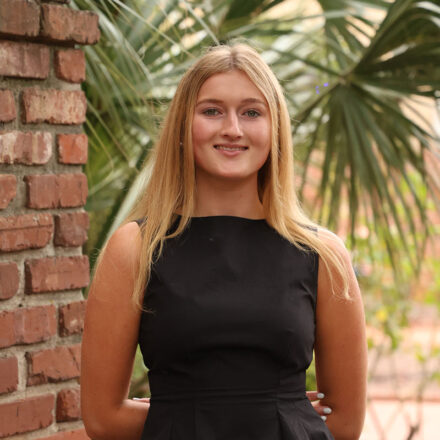
Sixteen-year-old Amelia Brumbach of Raleigh, North Carolina, briefly stood on top of the grounds’ Monument to the Confederate Dead.
“I’ve led protests at my school and gone to the principal’s office because of it,” Brumbach said proudly.
She said her goal is to encourage others to get involved.
“It’s no longer a democracy anymore, and as a nation we need to fight against that,” she said. “Instead of just complaining, we can take action.”
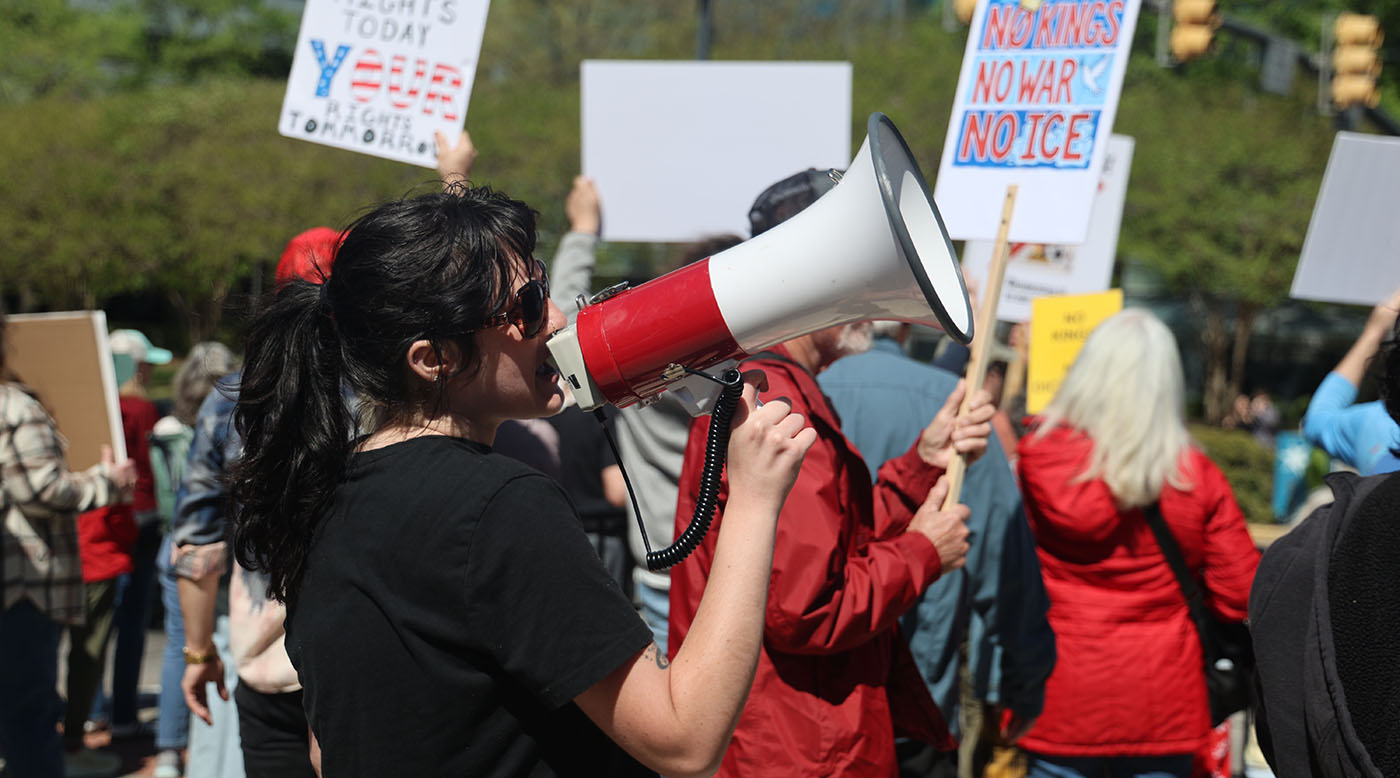
Quinnie Mustain leads the crowd in a chant, “Biggest threat in the world today: Donald Trump in the USA” facing Gervais Street in front of the South Carolina Statehouse. Photo by Julia Moulton/The Carolina Reporter
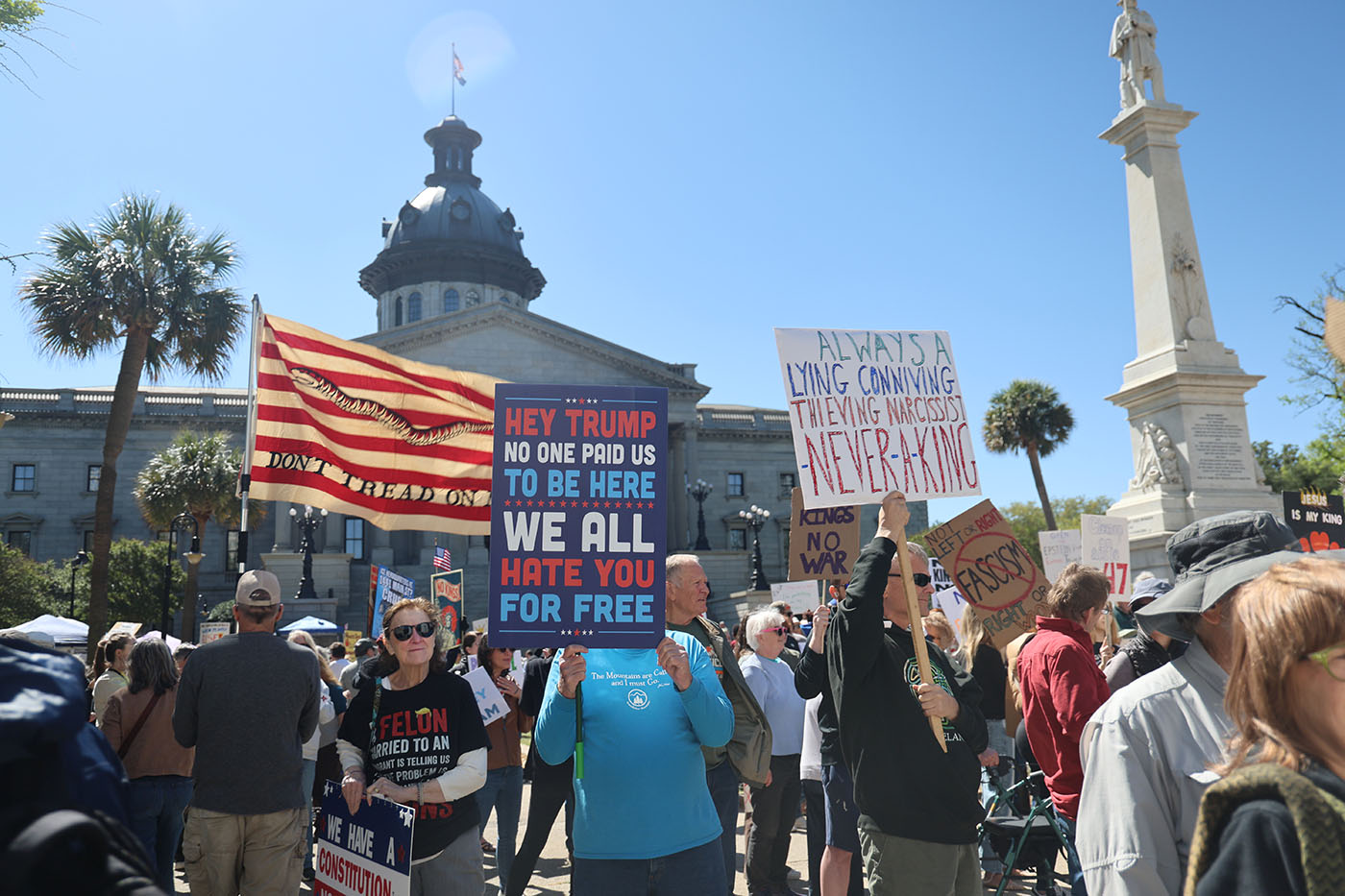
Protestors display anti-Trump signs. Photo by Julia Moulton/The Carolina Reporter
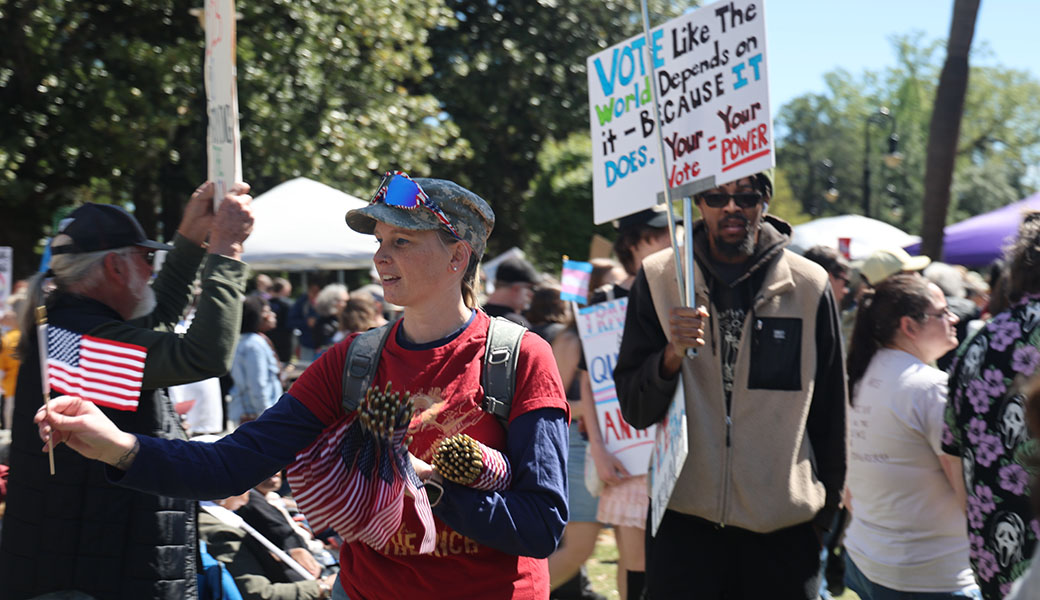
Amanda Arthur hands out American flags to the crowd on the Statehouse lawn. Photo by Julia Moulton/The Carolina Reporter
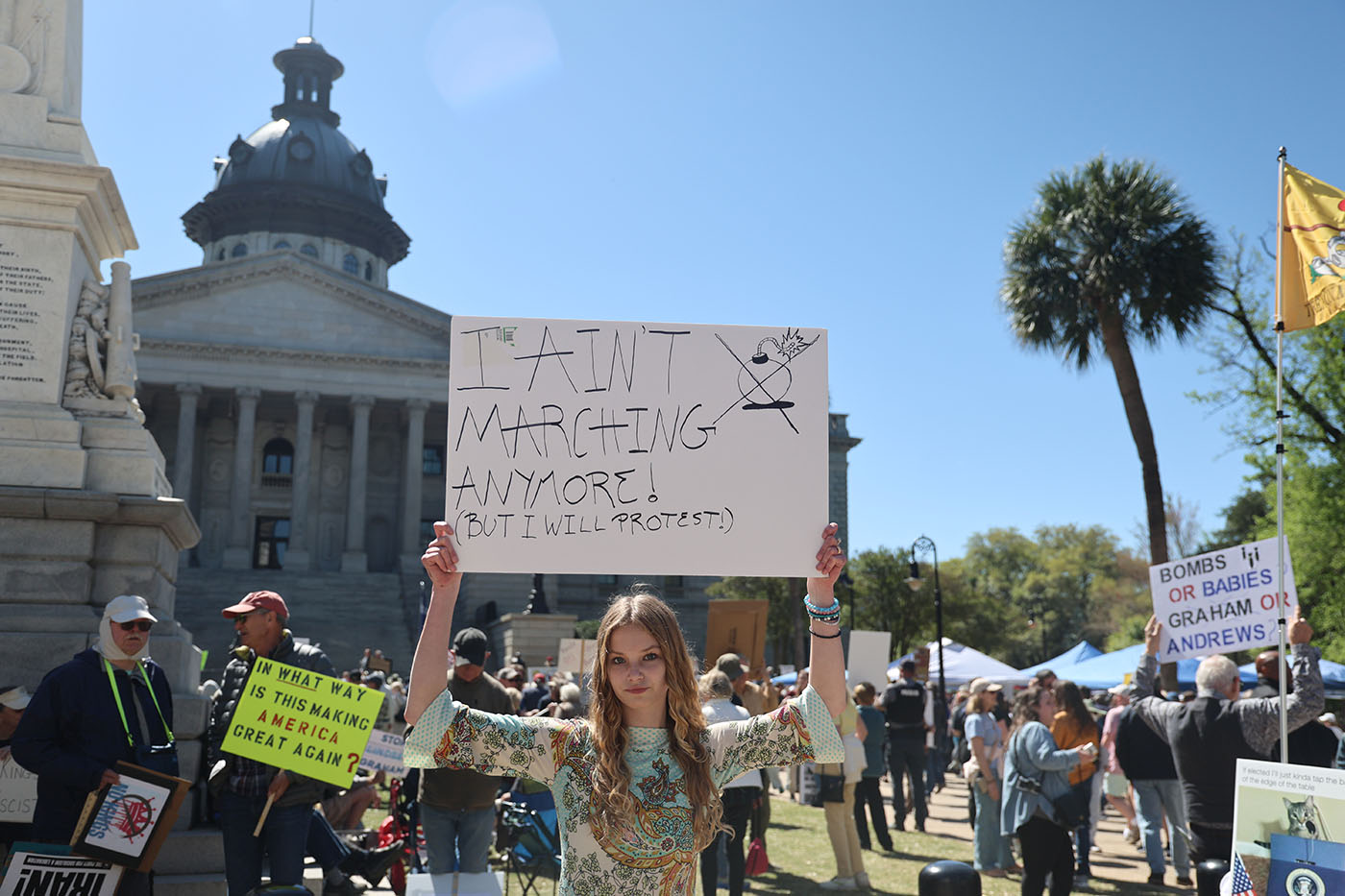
The sign of 16-year-old seasoned protestor Amelia Brumbach reads: “I ain’t marching anymore but I will protest.” Photo by Julia Moulton/The Carolina Reporter