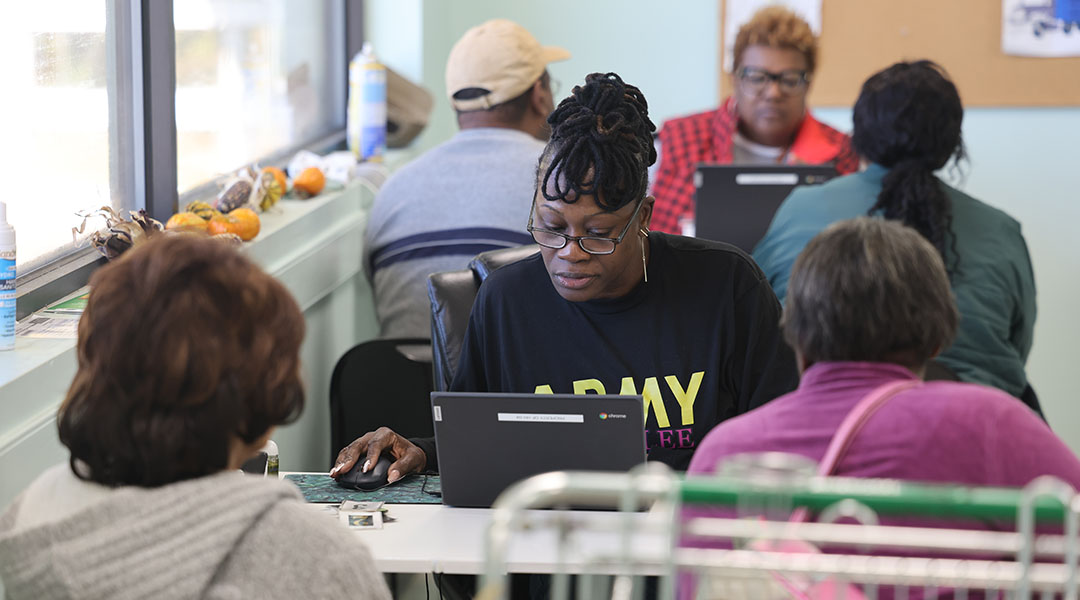
Brandy Clark, a long-time Harvest Hope volunteer, helps process food requests on Nov. 4 during the government shutdown-induced SNAP benefit pause. Photo by Miles Shea/Carolina Reporter
SNAP assistance has remained denied, as the record-long government shutdown continues, placing a spotlight on food insecurity around the country.
In Richland and Lexington counties alone, 34,788 households qualified for more than $14 million in benefits in October 2025, providing assistance to 74,658 South Carolinians. In November, those benefits never came.
Though a resolution to end the shutdown has passed the U.S. Senate, a House vote and presidential signing are still needed.
Dr. Deborah Greenhouse, a Columbia pediatrician and former president of the state’s chapter of the American Academy of Pediatrics, said despite working with families helped by SNAP for years, she’d never witnessed anything quite like this.
“I’ve been in practice for 30 years, and I’ve never before seen what I’m seeing now – the level of fear and panic in many of my families – because they literally don’t know where their next meal is coming from,” Greenhouse said. “They don’t know how they’re going to feed their children.”
Food banks and restaurants across the Midlands have launched efforts to help those in need. A long list of local restaurants are providing special promotions offering free or discounted meals, supplementing the efforts of food banks such as Mission Lexington and Harvest Hope.
Harvest Hope volunteer Brandy Clark said she’s passionate about her work and has been inspired by the community coming together to support each other.
“It’s important right now to volunteer,” Clark said. “Any and everyone will eventually need some kind of help, whether it’s with clothing, whether it’s just any type of service.”
Greenhouse said some hold mistaken views about food assistance and the people who rely on it.
“I think there’s always been a misperception that folks who receive SNAP benefits are lazy, that they are sitting around and using their SNAP benefits to buy filet mignon,” Greenhouse said. “That could not be further from the truth. Most SNAP benefit recipients are adults that are working. Some of them are working more than one job, but they’re low-paying jobs, and they’re just trying to get by. They’re just trying to feed their families.”
Harvest Hope CEO Errin Rowe said the nonprofit is prepared to handle extreme cases.
“Whether it’s a hurricane or COVID, the need increases,” Rowe said.
For Jim Jefferson, who volunteers with God’s Abundance for All People food pantry in Newberry, visits to Harvest Hope and loading up his truck are nothing out of the ordinary.
“We do this on a regular basis,” Jefferson said. “I come down here once or twice a month.”
Landon Brantley, a South Carolina State Guard member deployed to help at Harvest Hope on Nov. 5, said it’s an honor to be part of a large humanitarian effort.
“There’s a lot of entities in Columbia that are out here to help people, we just happen to be one of them,” Brantley said. “I hope that people understand people are here to help them.”
At Zion Mill Baptist Creek Church, off Garners Ferry Road, Mama’s Kreative Treats catering has been offering free hot meals to SNAP recipients on Thursdays. Church pastor Wendell Sumter, whose sister Darlene Shiver runs the catering company, said the decision to start the effort was simple.
“When we heard what was happening with SNAP benefits, immediately, it was almost instantaneous, she sent me a text message and said, ‘Let’s bless people,’” Sumter said. “Our goal was just to make sure that anyone who needed assistance had the opportunity to come and receive some food, at least a hot meal.”
Rowe called on national lawmakers to take action as soon as possible, and said even at peak capacity, it’s not practical to place an exponentially increased burden on community organizations like food banks and churches.
“SNAP is $100 million a month,” Rowe said of South Carolina’s portion of the benefits. “We can’t step into SNAP.”
Greenhouse said food access should never become wrapped up in negotiations, and that state and national leadership are obligated to work to find a better long-term solution.
“Feeding children and feeding families should not be a political issue,” Greenhouse said. “It should not be weaponized. We should have a system in place where this can’t happen, where if for whatever reason, funds go away, we have another way of making this work.”
Andre Hill, who has received SNAP benefits in the past and was at Harvest Hope on Nov. 6, said he was grateful for the help he was offered, and that’s it’s critical for people to come together in times of need.
“It’s important that we all do our part and take care of each other, you know?” Hill said. “I’m not even that outside of being part of helping, volunteering and boosting each other up. I think anytime you’re helping someone, it’s a wonderful thing.”
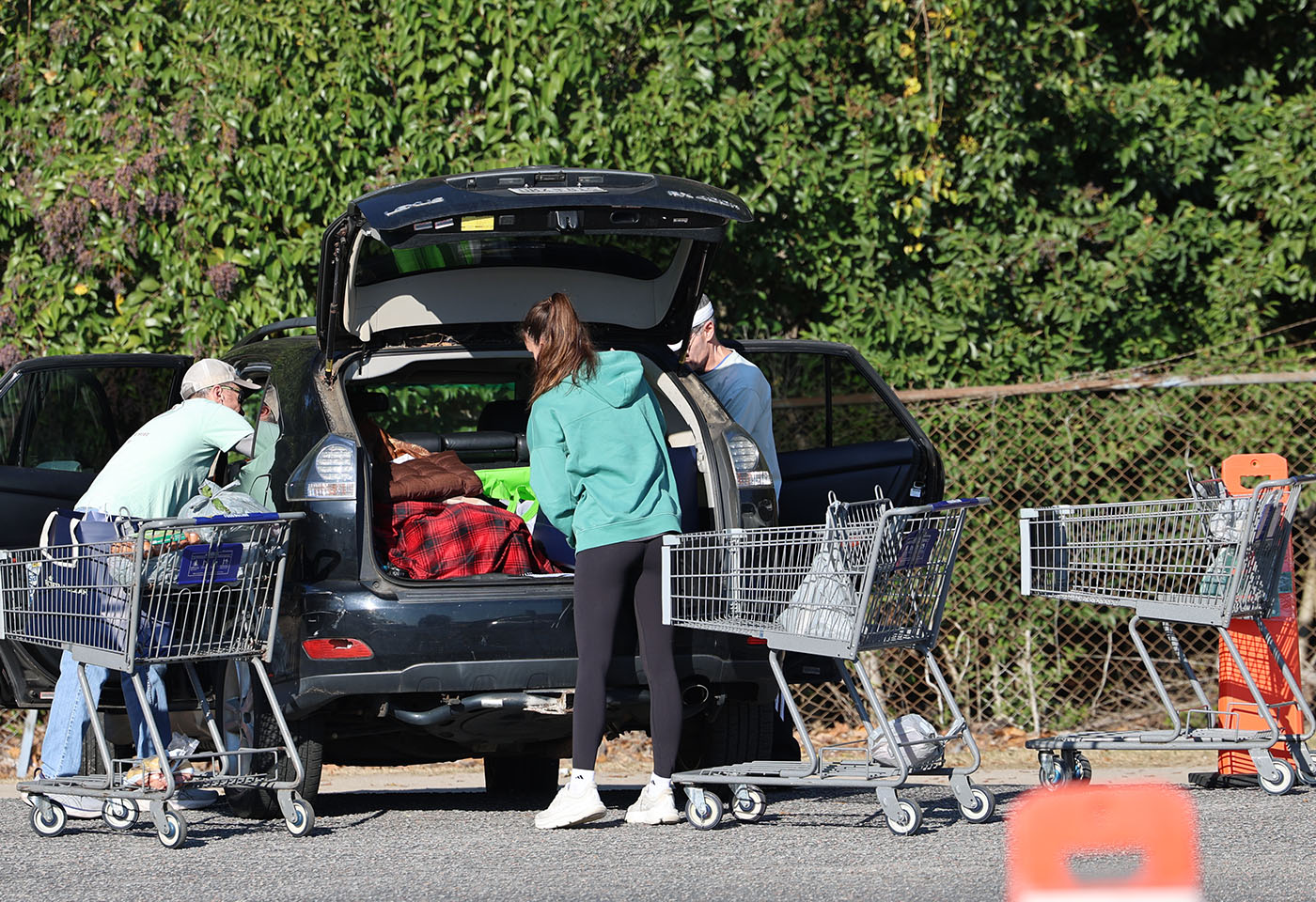
Robert Jeeter, right, a Harvest Hope volunteer, helps a family load food into their car. Photo by Miles Shea/Carolina Reporter
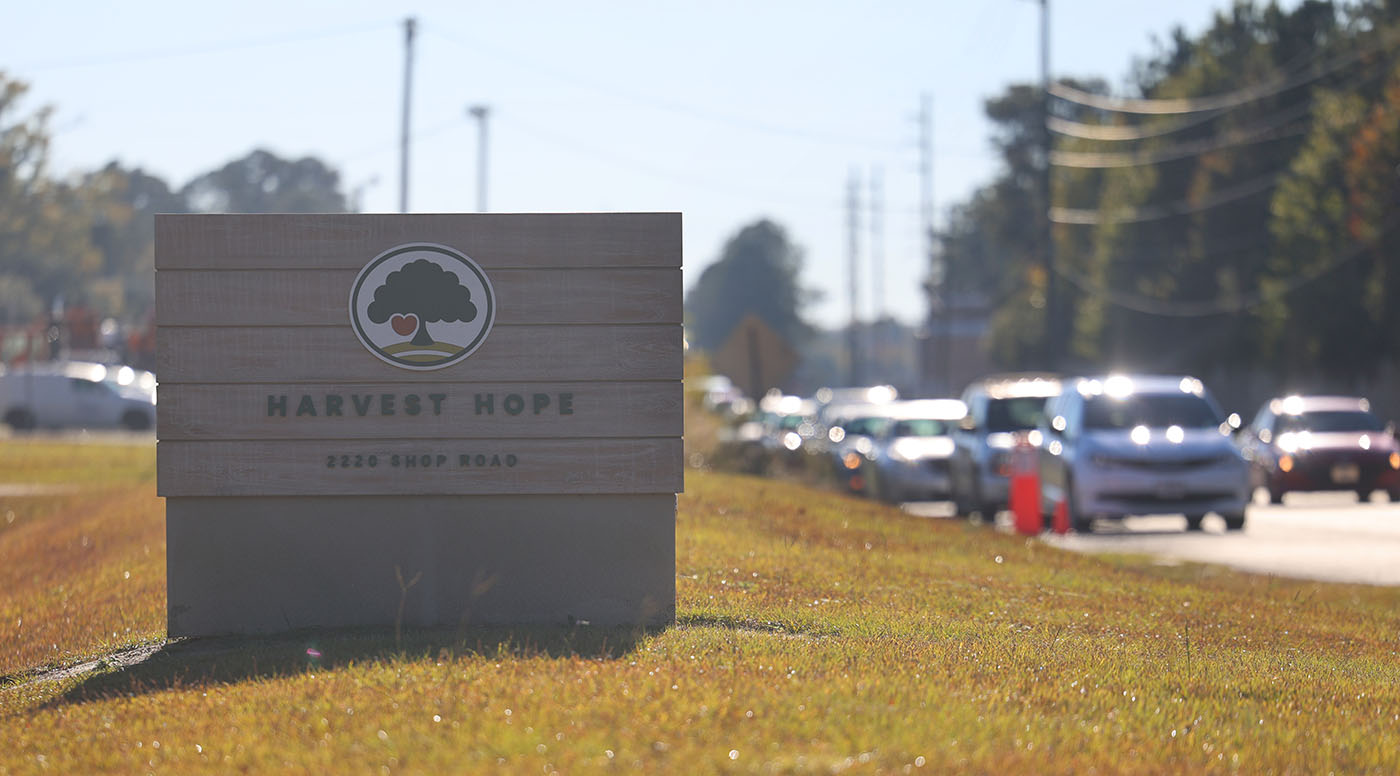
A line of cars stretches down Shop Road as people wait to enter the parking lot of Harvest Hope Food Bank on Nov. 6. Photo by Miles Shea/Carolina Reporter
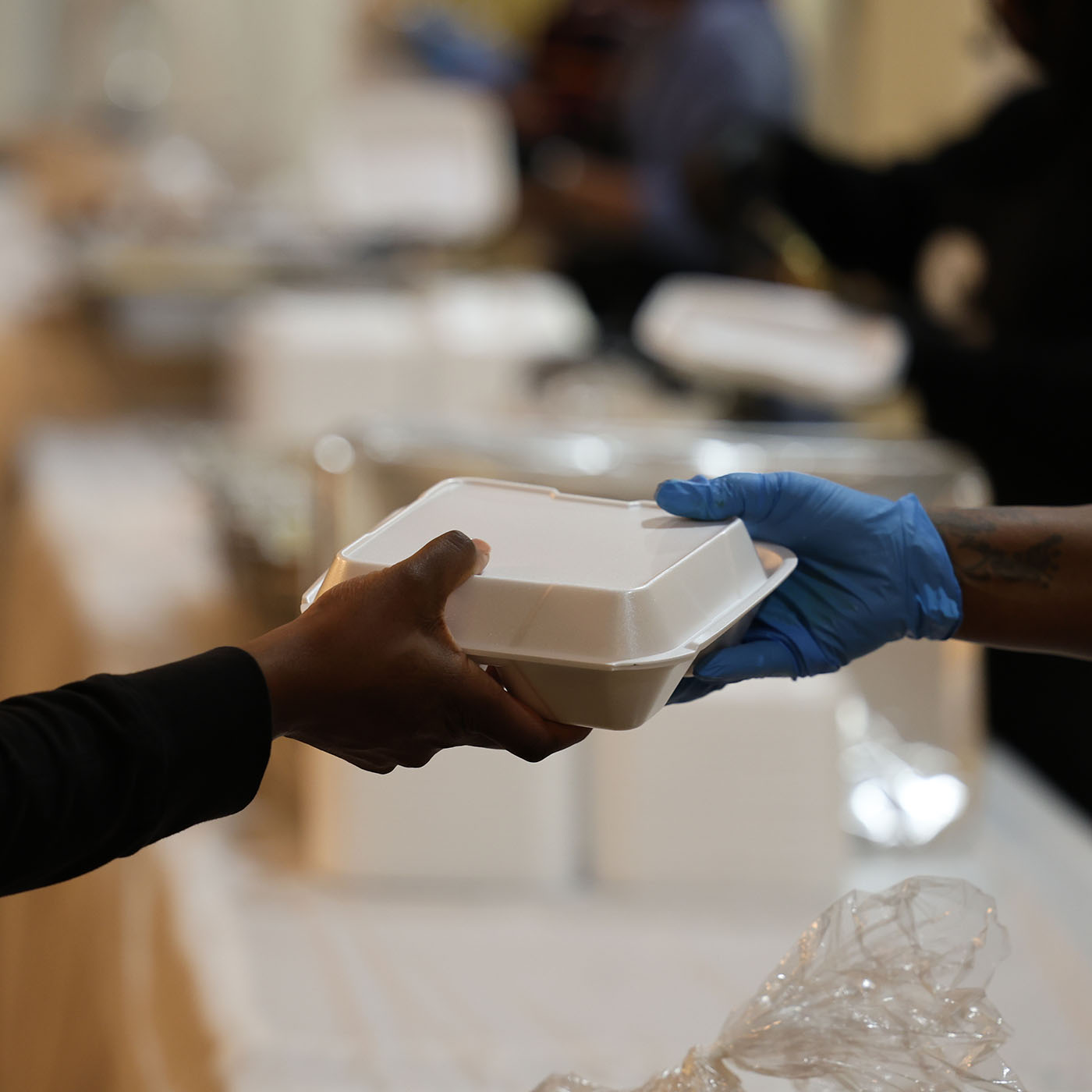
Keya Sims hands a freshly packed, hot meal to a visitor at Zion Mill Creek Baptist Church on Nov. 6. Photo by Miles Shea/Carolina Reporter
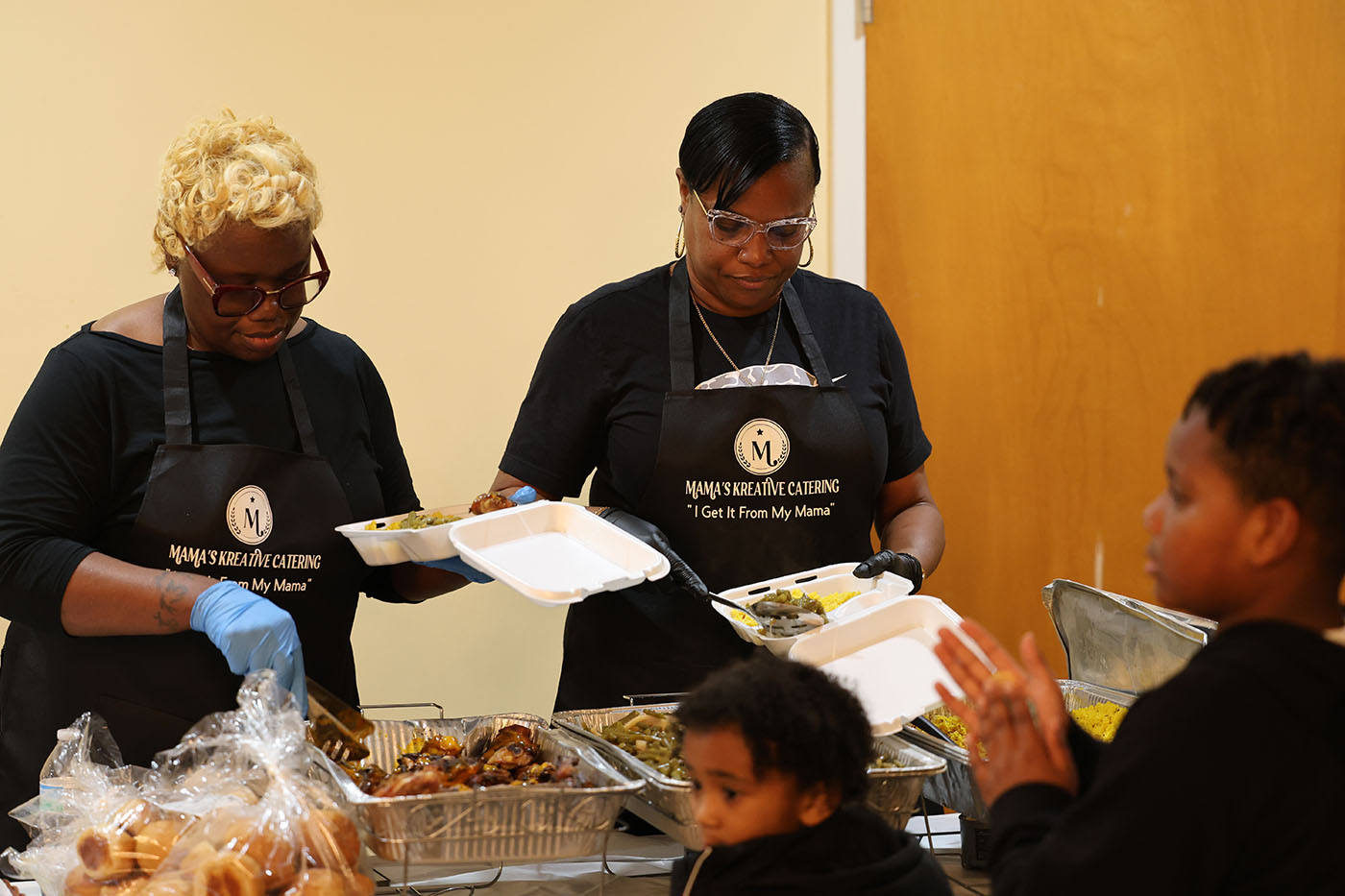
Volunteers LaQuan Moore and Keya Sims pack hot meals at Zion Mill Creek Baptist Church on Nov. 6. Photo by Miles Shea/Carolina Reporter