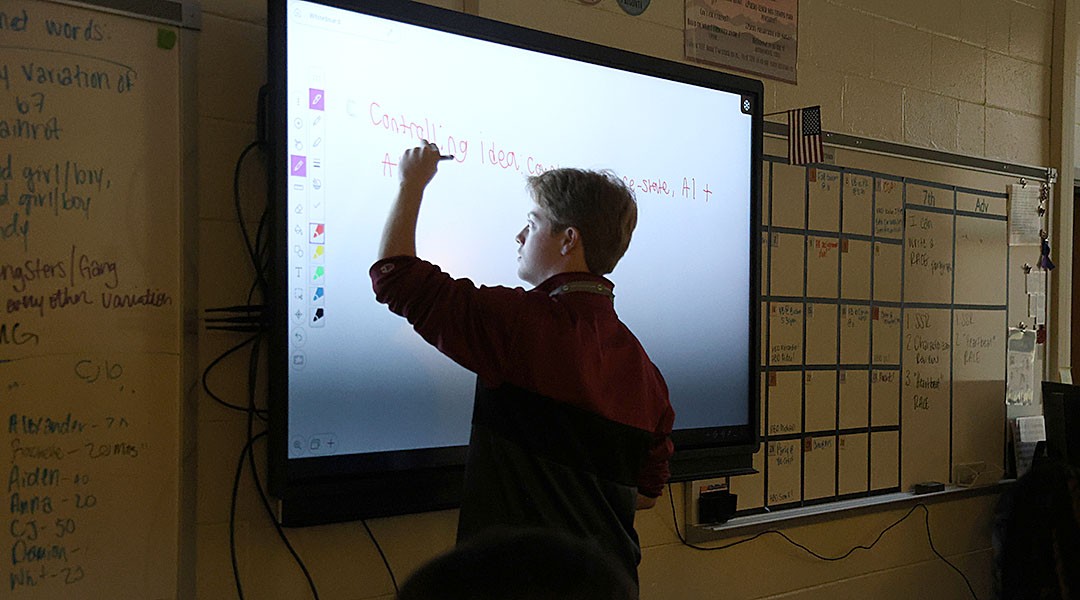
Gavin Davis, a University of South Carolina student teacher, shows his middle school students how to write an argumentative essay. Photo by Lauren Guest/Carolina Reporter
Teaching is a career that will always need more people, and having a good teacher can be the backbone for a student’s early life.
That leads to the question: Are young teachers able to create that backbone for their students?
Jordan Page, clinical instructor of early childhood education at the University of South Carolina, said “yes.”
“Younger teachers are able to connect with TikTok and social media and the newest trends and fads,” Page said. “And when thinking about connecting with students and classroom management, the (heart) of that is knowing students holistically, and being able to appreciate all that they come with.”
Still, the ease that some younger teachers have with students might not outweigh the fact that being a new teacher is tough.
A fact sheet by the Learning Policy Institute shows data about teacher shortages from 2012-2025 and the reasons why teachers leave the profession.
The state of South Carolina created CarolinaTIP to keep first-, second- and third-year teachers in the field.
Angela Adams, the induction manager for the program, which sticks with graduate students for their first three years of teaching in a classroom by themselves, to help them want to stay teachers.
“We offer our teachers three things,” Adams said. “No. 1, we offer them professional development sessions. … The second thing we give them … is personalized coaching … And then the third thing we offer is that community of other teachers.”
CarolinaTIP came about because about 60% of teachers were making it through their first five years, Adams said.
Now in its ninth year, CarolinaTIP has successfully had eight consecutive years of more than 90% of teachers resigning their contract for the next year, Adams said.
“The program has grown a ton,” Adams said. “The first year of existence was the 2017- 2018 school year, and that year there were 15 teachers and one coach. … This year we’re serving 306 teachers in years one, two and three in their own classrooms, 29 coaches and two lead coaches.”
Emily Kladar, now a fourth-year teacher, said CarolinaTIP helped her a lot.
“Their attention to what first-year teachers really needed and second-year and even third-year teachers, it was so considerate,” Kladar said. “Even like buying our lunches and giving us a day off (and not using PTO) and … having that sense of community.”
Kladar is not the only one who feels that way.
Bailey Johnson, the music teacher at Riverbank Elementary School in Lexington School District 2, said CarolinaTIP helped her with classroom management, which can be daunting for young teachers.
“I feel like I understood a lot more about classroom management and was able to effectively apply some of the strategies I learned,” Johnson said. “And I’m still doing it to this day. Just little things I learned way back when.”
Being a younger teacher means the instructor is closer to their student’s ages than more veteran teachers, which can be hard in a different way.
“What I’ve learned by spending lots of time with 22-, 23-, 24-year-olds that are teaching is, it feels like the difficulties of being a new teacher are just you,” Adams said. “That’s just how it feels. And it’s not the case. … It’s everyone, but you don’t know that if you’re the only first year teacher around.”
Johnson said being closer to her student’s ages has helped her understand better their pop culture trends and the slang they use.
New technology is the most pronounced difference between new teachers and more seasoned ones.
“That gives me a different perspective on what the kids are into, compared to older teachers who maybe didn’t grow up with technology,” Johnson said. “… I think just simply because of that, that’s a benefit.”
Avery Isgett is a young teacher who teaches at Dreher High School in Richland School District 1. She said being closer to her students’ ages caused a little bit of trouble at the start of her teaching career.
“I definitely felt a lot of pressure to sort of act older, act more mature, even more strict than what I naturally am,” Isgett said. “That was one aspect of it. But honestly, the more I got used to teaching, … it became a lot easier and just stopped really being a factor.”
Younger teachers also have more energy than some older teachers, USC’s Page said.
“Being able to play outside with students, right, and go to their after-school activities,” Page said. “Those things make a big difference.”
Having those connections can be part of why teachers love what they do.
“No one gets into teaching to get rich,” Adams said. “People go into teaching to make a difference. And making a difference starts with connecting with children. I mean every first-year teacher finds students in their class they just instantly connect to, and they just love, and they will think about it for the rest of their careers.”
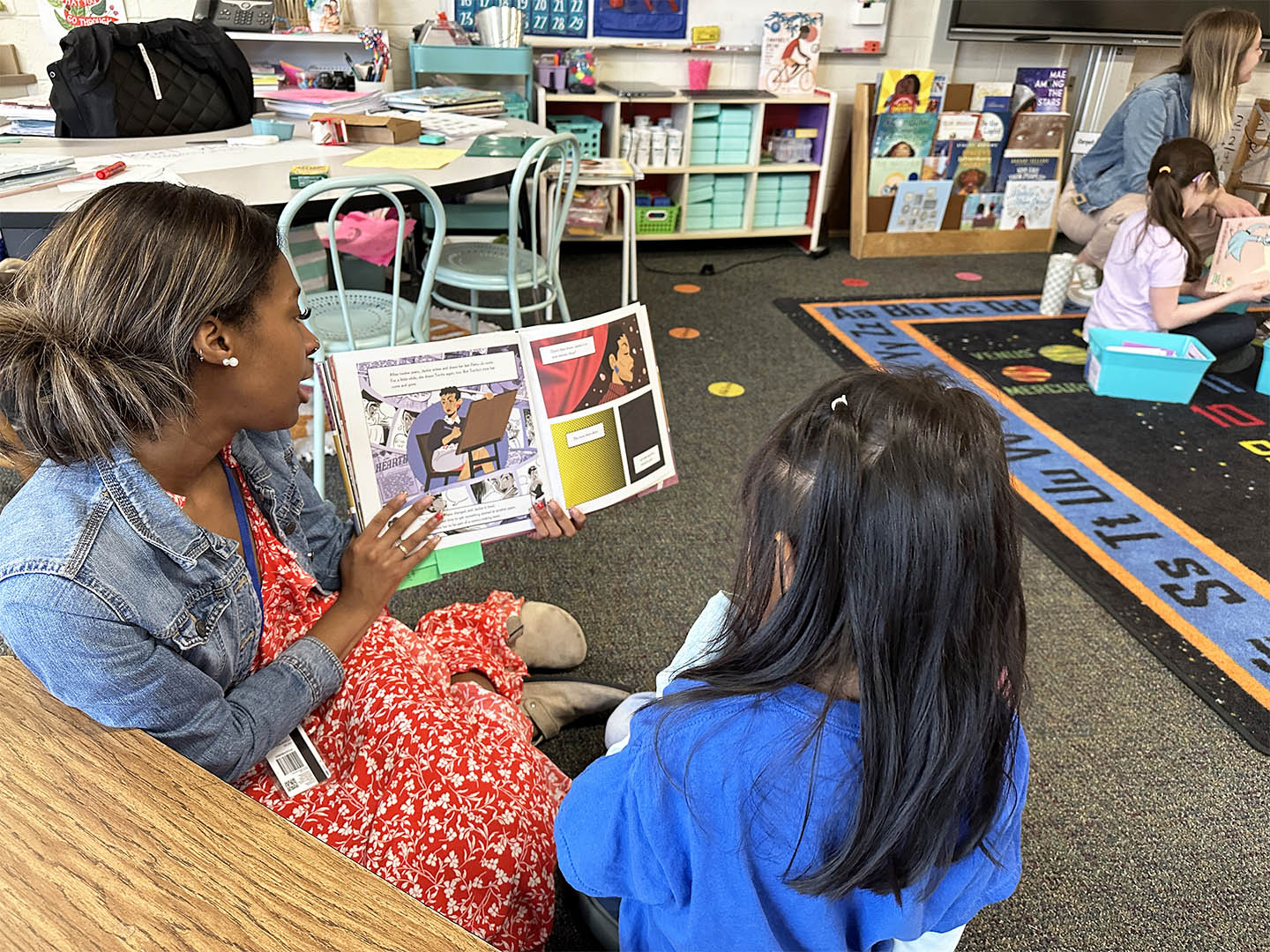
Rayvn Mims, a USC student teacher, reads to one of her elementary school students. Photo courtesy of Jordan Page/Carolina Reporter
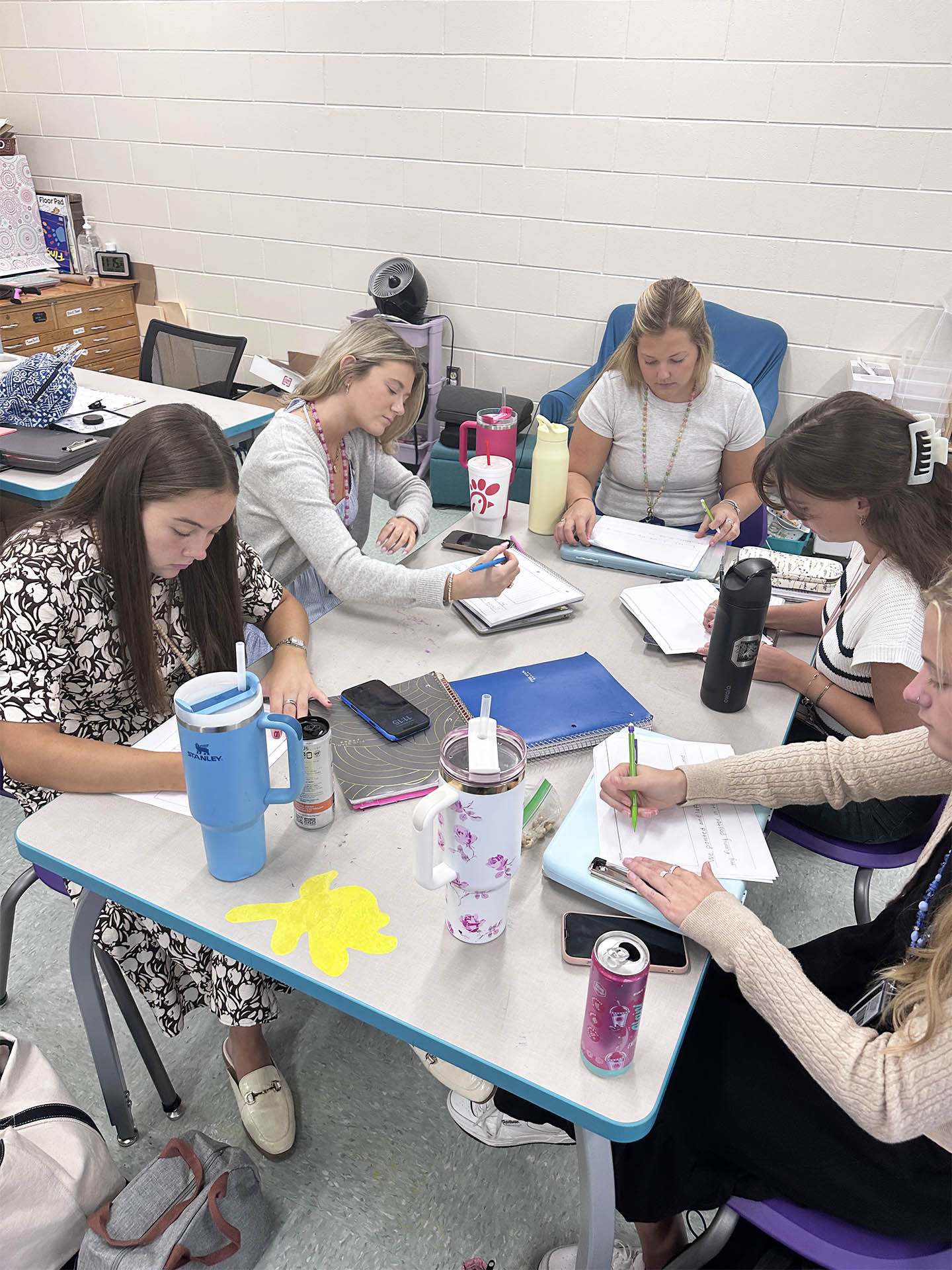
USC education majors work on a spelling assignment for their students. Photo courtesy of Jordan Page/Carolina Reporter
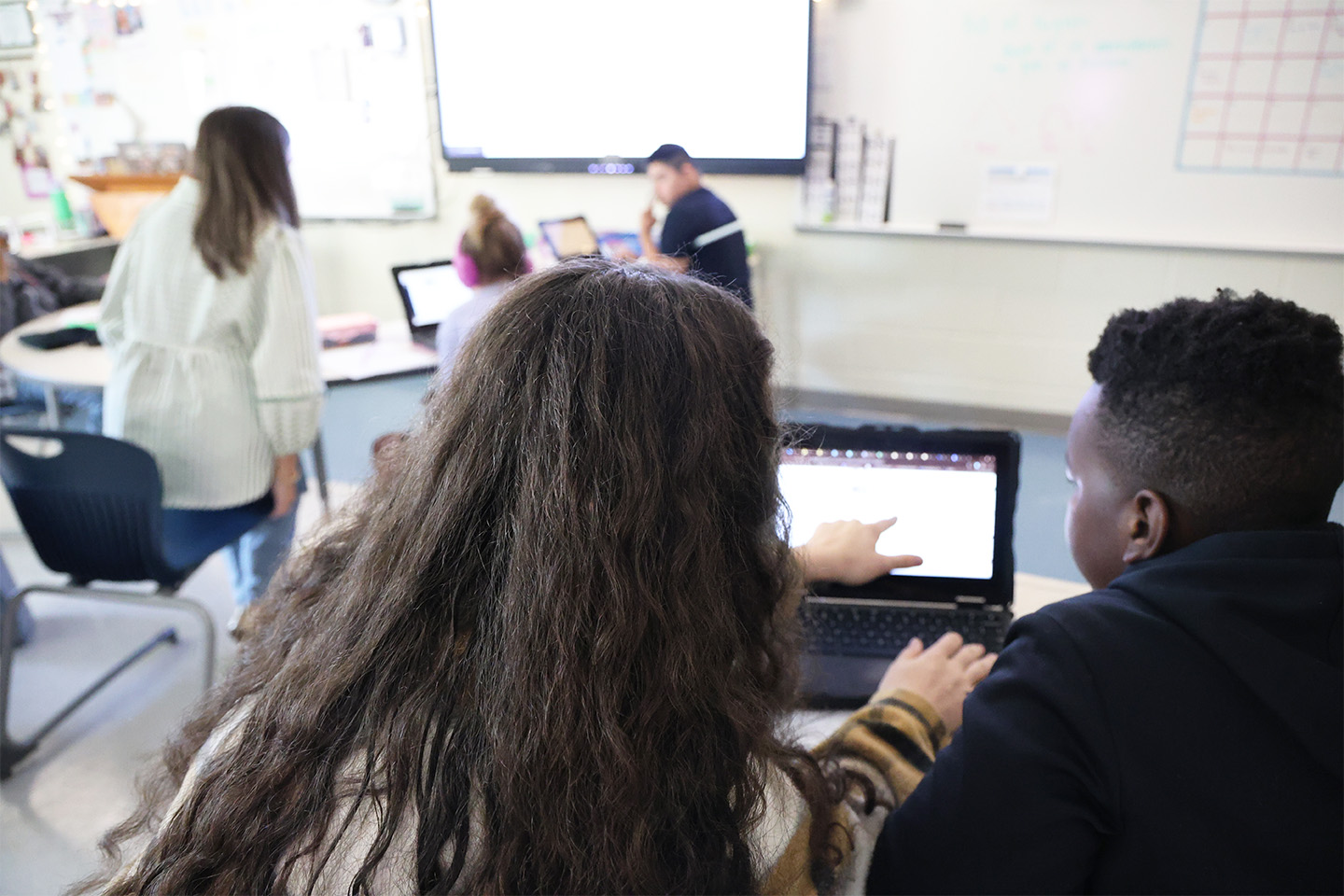
Allison Bobst, a USC student teacher, helps one of her middle school students with his social studies notes. Photo by Lauren Guest/Carolina Reporter