A graphic representation of a University of South Carolina graduate contemplating her future as she envisions opportunities in cities across the country, from Charleston to New York. Illustration created with Adobe Illustrator and Canva by Morgan Kozak/Carolina Reporter
Columbia is home, at least briefly, for many, so when students at the University of South Carolina toss their caps in the air at graduation, where do they go next?
Well, when it comes to where graduates put down roots, Columbia doesn’t even crack the top six.
The largest concentrations of USC graduates live in Greenville (24,358), Charleston (18,564) and Charlotte (15,713), according to recent data from the USC Alumni Association. Atlanta, New York and Washington, D.C., round out the list, while Columbia is nowhere to be found.
But Columbia doesn’t lose all its graduates to the bigger cities.
Why do some stay?
Those who choose to stay often cite a mix of relationships, professional opportunity and familiarity, as well as USC’s network that connects students to the local job market.
George Hanna, a recent USC graduate, is staying true to his roots after spending six years on campus. He graduated from the College of Pharmacy in May 2025, after completing two years of undergraduate studies and four years of graduate school. He now works in Columbia full-time.
“USC and the College of Pharmacy played a huge role in my decision to stay, as I made my first internship connection through an email sent by the college,” he said. “… I am now working as a pharmacist in the same place that I spent four years (working for) as an intern during school.”
Why do others leave?
Not every graduate stays, of course.
Many leave for bigger cities with more job density, cultural offerings or simply a change of pace.
Virginia Jones graduated from the School of Journalism and Mass Communications with a degree in public relations and a minor in political science in December 2024. She is among those who chose to venture out of Columbia post-grad. Jones works as a community outreach specialist with the Charleston County Board of Voter Registration and Elections.
“Had I not attended USC, I likely wouldn’t have visited Charleston as often as I did while a student at the university, which is how I discovered how much I loved the city,” she said. “… What I’ve valued most from my USC experience in Charleston are the connections and relationships I’ve built with graduates and alumni.”
The Career Center’s take
Olivia Barry, a graduate assistant at the USC Career Center and a master’s student in human resources, works closely with students as they prepare for life after graduation.
“In today’s competitive job market, we’re focused on networking,” Barry said. “… We provide resume consultation, cover letter consultation, workshops with various career readiness topics, interview preparation, job search consultations and preparation for graduate school.”
The Career Center’s wide-ranging services and employer connections play a critical role in helping USC students take their next step, whether in Columbia or beyond.
The bigger picture
Columbia still faces stiff competition, even with the Career Center’s resources, from cities like Charleston and Greenville, which have branded themselves as attractive hubs for young professionals with growing industries and vibrant lifestyles.
Columbia’s economic base — anchored by state government, healthcare and education — offers stability. But it doesn’t often produce the excitement or upward mobility that new graduates seek.
For some, such as George Hanna, Columbia’s mix of community and opportunity makes it the right place to launch a career.
For others, such as Virginia Jones, cities such as Charleston offer a stronger pull.
But in the end, for many the attraction might be location, location, location.
“Originally from Virginia Beach, I was drawn to Charleston because it reminded me of home with its coastal feel and close-knit community,” she said.
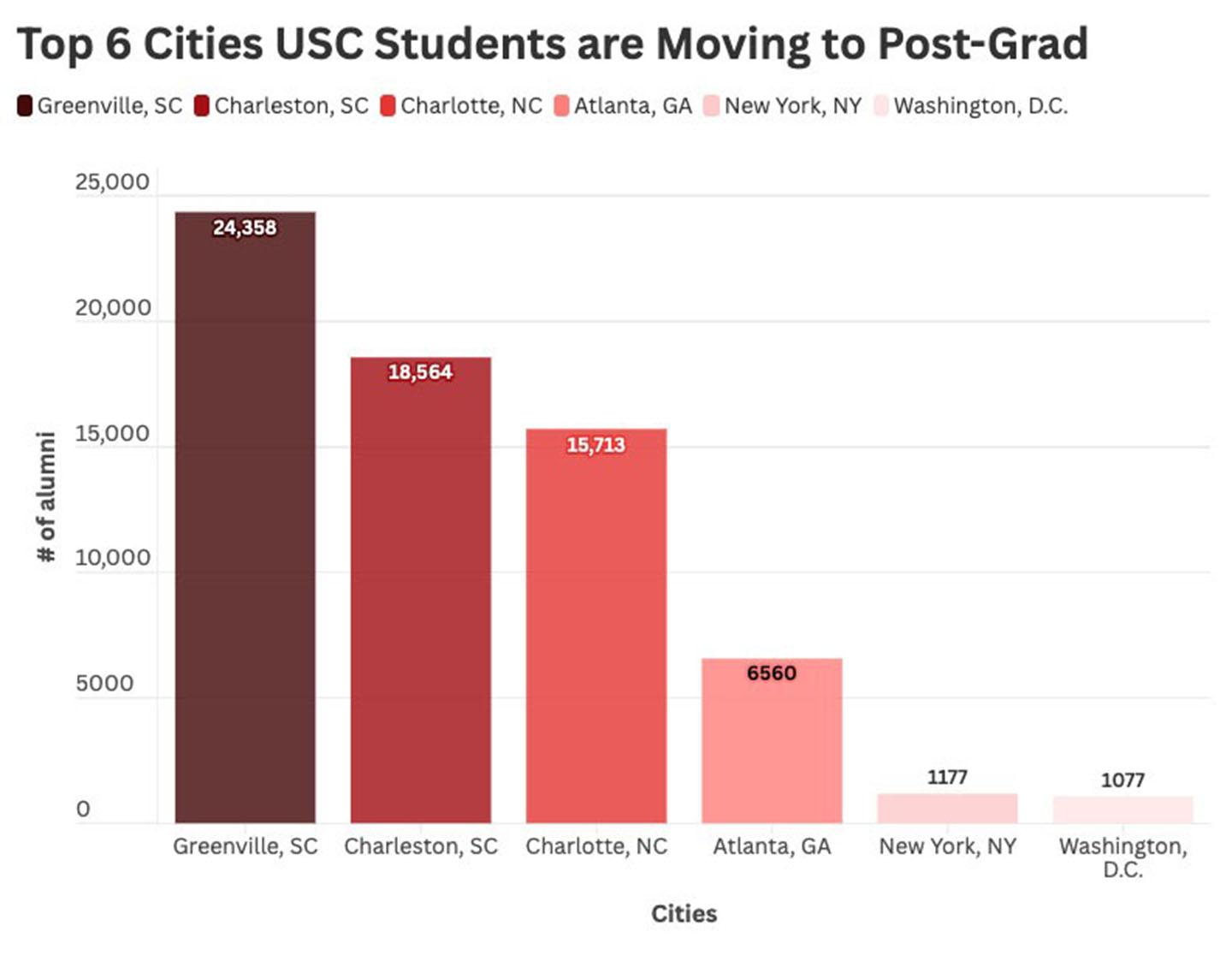
Greenville (24,358), Charleston (18,564) and Charlotte (15,713) top the list of where USC alumni live after graduation. This data, compiled by the school’s alumni association, represents all alumni who work in these top six cities. Graphic by Morgan Kozak/Carolina Reporter
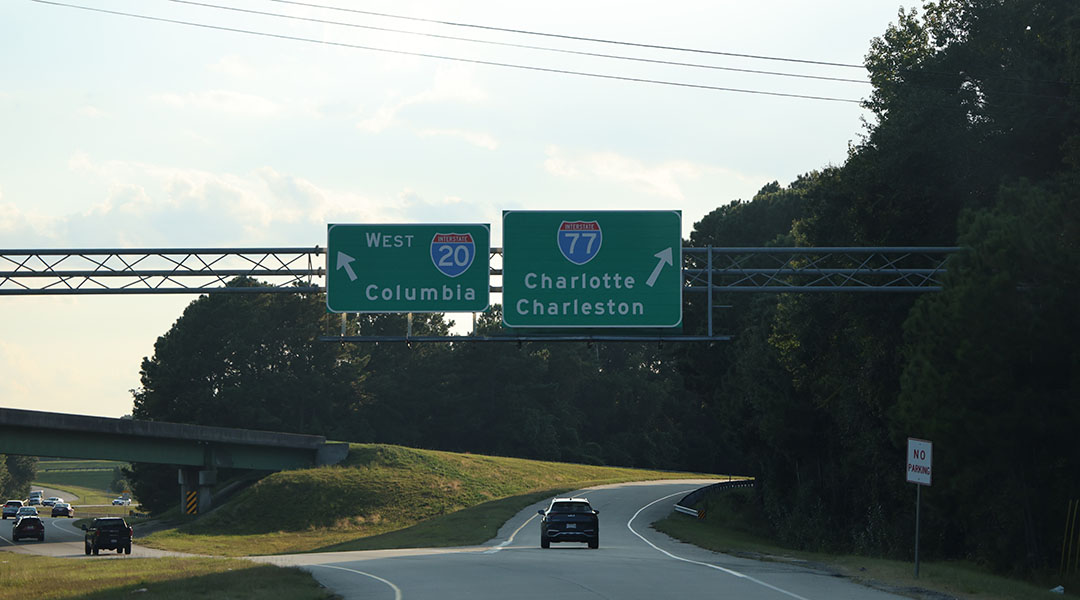
USC grads face a choice: stay in Columbia or leave for Charlotte and Charleston. Photo by Morgan Kozak/Carolina Reporter
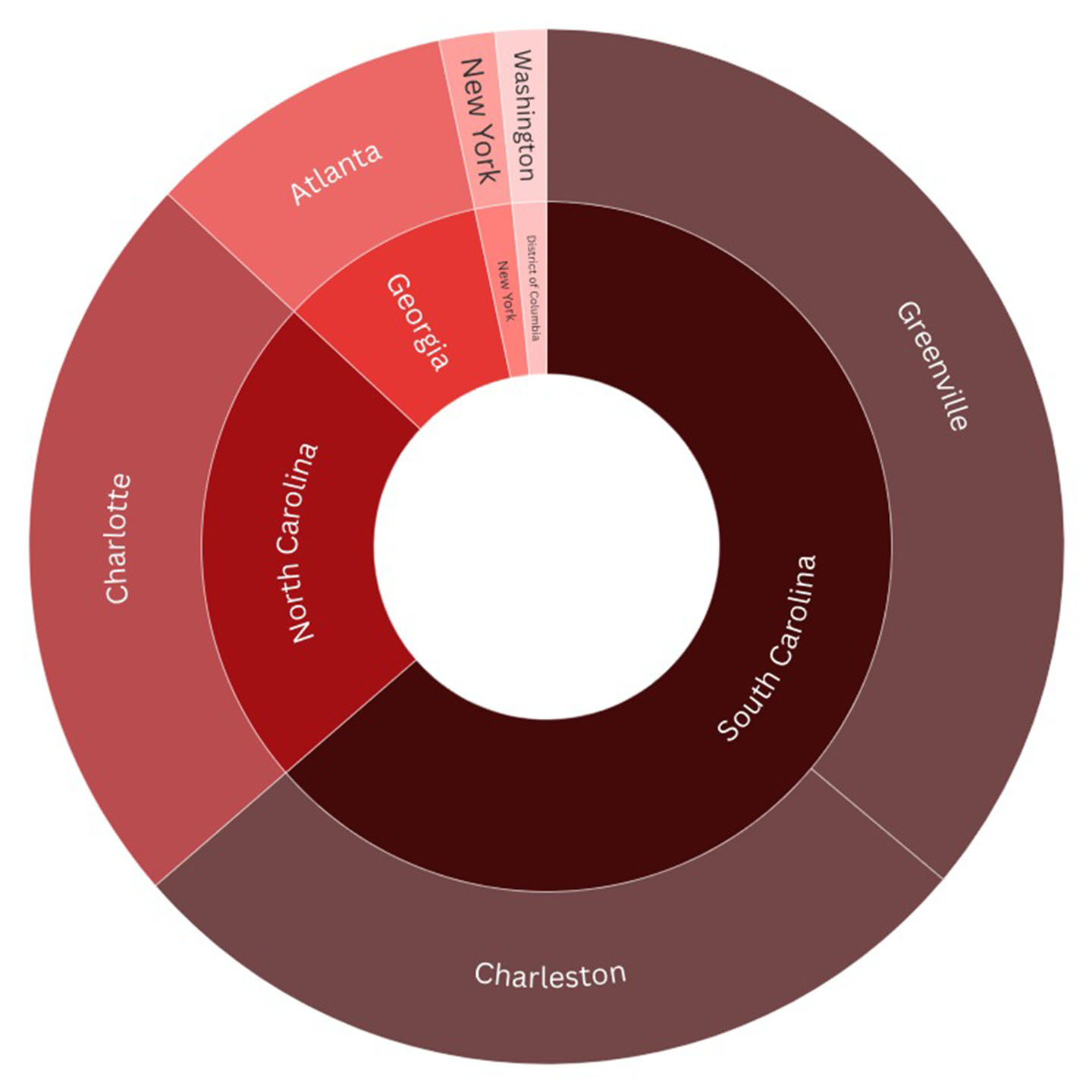
Regional hubs in South Carolina and North Carolina draw the largest share of USC graduates, while Atlanta, New York and Washington, D.C. trail behind. This data, compiled by the school’s alumni association, represents all alumni who work in these top six cities. Graphic by Morgan Kozak/Carolina Reporter
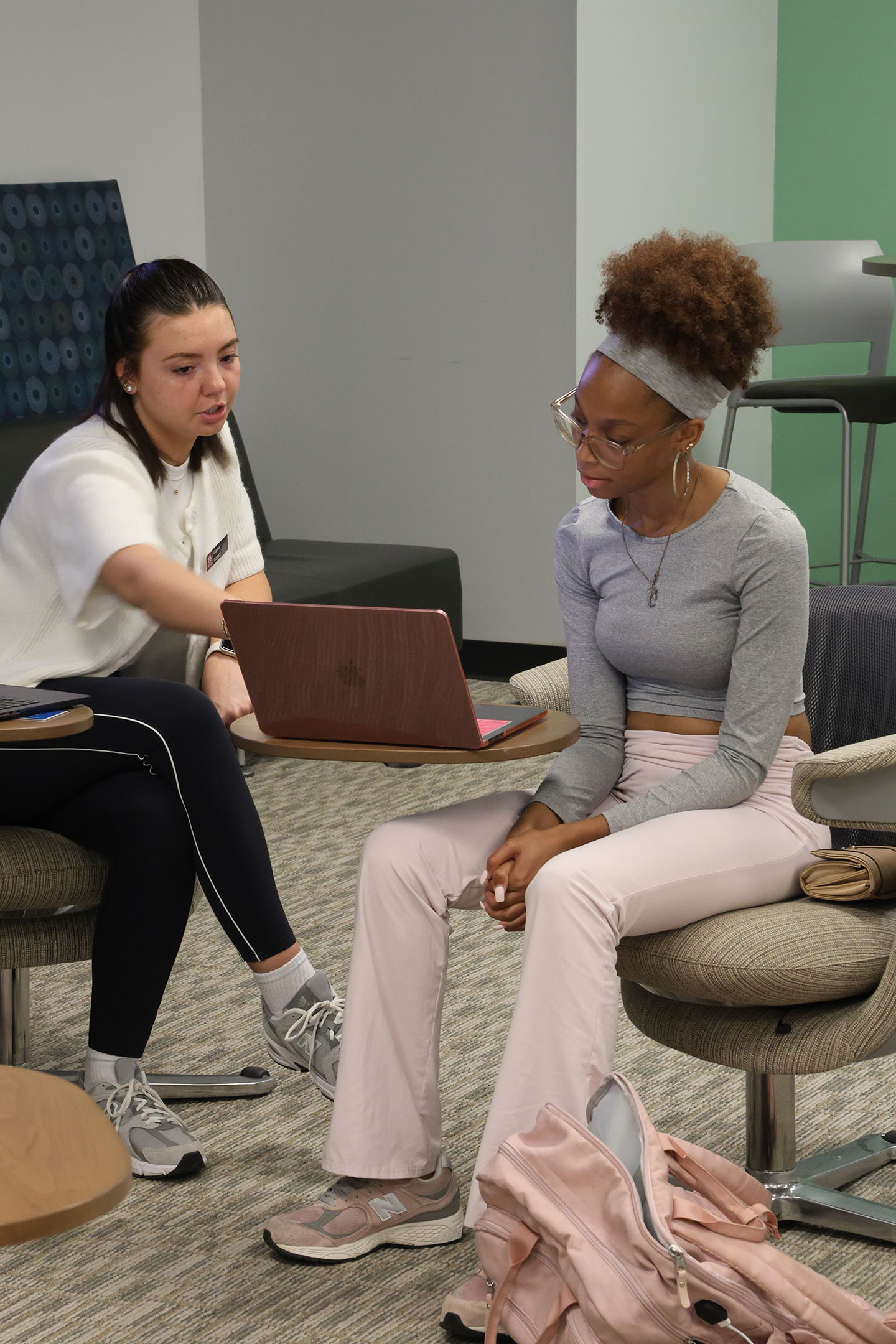
Lucy Woolridge, a staff member at the USC Career Center, helps a student prepare for life after graduation. Photo by Morgan Kozak/Carolina Reporter